Investor Reports

Corporate Responsibility

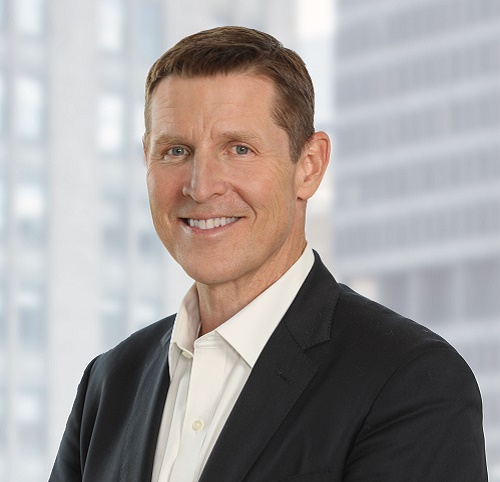
Tim Berry, Letter to Shareholders

April 6, 2026

Topics

Tim Berry

The American Dream endures when opportunity is within reach. JPMorganChase will continue to pair data with action, capital with creative thinking and ambition with local execution — so families can buy a home, small businesses can hire and grow, and workers can gain the skills that lead to good jobs.

Tim Berry

Global Head of Corporate Responsibility, Chairman of the Mid-Atlantic Region

Read more
01

Introduction

For more than 225 years, JPMorganChase has been an anchor and an accelerator for the global economy, financing the historic and the everyday — from the Brooklyn Bridge and Allied efforts in World War I to the house down the block and the small business on Main Street. We take on great economic challenges while showing up locally for customers, clients and communities. That vantage point helps give us a clear view of the problems facing economies big and small, as well as the ability to act in ways that few institutions can.

But today, the economy isn’t working for everyone. Buying a home, starting a business, finding a good job and saving money have all become harder. These challenges are playing out against the backdrop of an increasingly complex and dynamic global environment that could generate additional headwinds. As a firm, we believe we have a responsibility to use our scale and expertise to make a real difference for families, workers and small businesses — turning insight into practical solutions for the people and places we serve.

01

Geopolitical insights that move decisions

The world is changing quickly. From conflicts in the Middle East to the rise of artificial intelligence, the continuing disruption can make some days feel like the ground is shifting beneath our feet. JPMorganChase serves corporations and clients in more than 100 countries so we feel these movements every day.

What sets our firm apart is our ability to connect global insights to local execution. This helps clients spot challenges and opportunities — from supply chain shifts to global trade realignments to regulatory changes — and move quickly whether they’re in Houston, London or Tokyo. Treated as a tool — not background noise — geopolitics can inform decisions for our clients and communities.

To help do this, last year we launched the JPMorganChase Center for Geopolitics. The Center works alongside experts across our lines of business to combine regional knowledge with intelligence, policy and market insights — assessing how world events affect markets, operations and industries. Through the Center’s reports, briefings and customized offerings, we deepen our clients’ ability to form practical, risk‑aware strategies that create long‑term value.

Building on the Center’s success, the firm launched Special Advisory Services to broaden our clients’ access to expertise in areas like supply chains and cybersecurity. We saw an expanded opportunity to help clients prepare for the business environment of the future and put our resources behind it, calling it the Security and Resiliency Initiative.

Derek Chollet, Head of the JPMorganChase Center for Geopolitics, talked with Secretary Condoleezza Rice about how global conflicts affect business.

Derek Chollet, Head of the JPMorganChase Center for Geopolitics, talked with Secretary Condoleezza Rice about how global conflicts affect business.

01

The Security and Resiliency Initiative: Supporting industries critical to national and economic security

National security and economic security are intertwined. Today, too many critical inputs, from rare earth minerals and pharmaceutical ingredients to advanced materials, are regularly unavailable within a nation’s borders. When supply chains are concentrated and there are talent shortages, everyone is at risk, including families, businesses and governments.

That risk is amplified when essential infrastructure, such as the power grid, faces mounting pressure from rising demand. By modernizing transmission and distribution systems, integrating innovative technologies and streamlining permitting processes, it’s possible to alleviate bottlenecks, strengthen resilience against storms and cyber threats, and help keep prices stable for families and small businesses.

Members of the Corporate Sustainability team met with clients in London alongside Heather Zichal, JPMorganChase Global Head of Sustainability, and Dr. Sarah Kapnick, Global Head of Climate Advisory, J.P. Morgan Commercial & Investment Bank.

Members of the Corporate Sustainability team met with clients in London alongside Heather Zichal, JPMorganChase Global Head of Sustainability, and Dr. Sarah Kapnick, Global Head of Climate Advisory, J.P. Morgan Commercial & Investment Bank.

That’s why we launched the Security and Resiliency Initiative (SRI), a $1.5 trillion, 10‑year plan to facilitate, finance and invest in industries that are critical to our national and economic security. We announced SRI in the United States in October 2025, and we have already expanded it to the United Kingdom.

Private investment works best alongside smart public policy so capital is only part of our broader plan. The firm will also advocate for policy changes that accelerate progress and help projects move from ideas to real results.

Our advocacy is paired with data and action. For example, a joint report from the JPMorganChase PolicyCenter and Center for Geopolitics outlined solutions that combine policy and philanthropy to close talent gaps, including the digital skills gap. Ninety‑two percent of jobs in the United States, including those in sectors critical to security and resiliency, require digital skills. Yet one‑third of manufacturing workers and one-half of all construction, transportation and storage workers don't have these skills. We believe all levels of the U.S. government should work together to make job training more accessible and effective, tailored to the needs of future roles.

The federal government, for instance, can expand apprenticeships to help close the digital skills gap. Similarly, states can create programs that connect education directly to real jobs and align funding to reward student outcomes, simultaneously driving their own economic growth. In Texas, House Bill 8 established a blueprint for coordinating education and career opportunities, shifting from a funding model based on courses and credit hours to one focused on tangible results: good-paying jobs. Community colleges in Texas now earn funding by educating more students with credentials that match the state’s workforce needs. We advocated for this legislation because it makes a real difference for people, businesses and local economies.

Our SRI investments cannot translate into production without workers ready to step into skilled roles, so policies like these are critical. Across the United States and around the world, communities face a growing skills mismatch: There are jobs available but too few workers with the training to fill them. Clients tell us every day that talent is a constraint, whether they need welders, electricians, engineers or technicians. This is not only an economic concern but also a strategic issue that affects long‑term competitiveness.

To tackle these challenges and drive meaningful change, public-private partnerships are essential. JPMorganChase has a proven track record of investing in regional talent collaboratives across the country that connect education and training directly to real workforce needs. With support from our firm, The Commit Partnership and the Dallas County Promise initiative have assisted over 115,000 students by bringing together businesses, educators and community organizations to link career education with local employer needs. When each of these stakeholders has a seat at the table, students can be guided to skills training needed for local job opportunities. We consistently support similar partnerships across the country that establish clear school-to-career pathways, preparing students for the high-paying, in-demand jobs of the future, and we plan to build on this success to help people secure good jobs and expand the talent pool for sectors essential to local and national resilience.

We’re doing this because we see a community’s workforce as part of its infrastructure, no less important than access to power, roads and bridges. A strong workforce is critical to attract investment, grow business and strengthen competitiveness. These strategies are rooted in communities because resilience is ultimately realized in neighborhoods: power that stays on during storms, secure networks for businesses, and products made closer to where consumers live and shop.

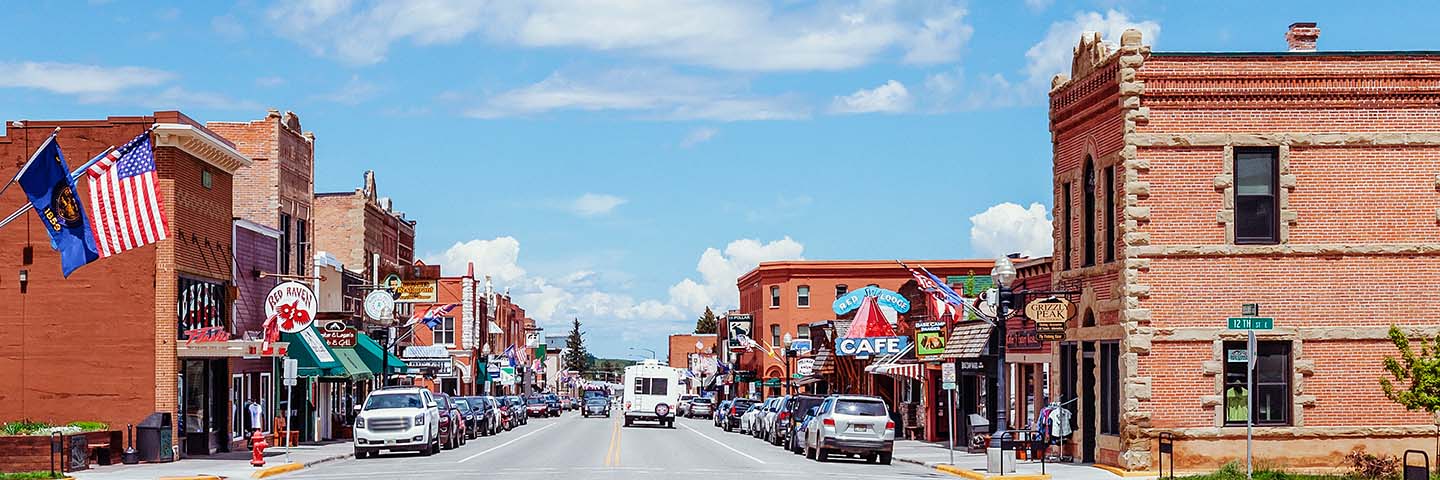
Public‑private partnership is crucial to SRI’s success — and, as noted above, it is already underway. In January 2026, we co-hosted the first Wyoming Resiliency Summit, convening industry leaders, investors, policymakers and community stakeholders for practical discussions on reindustrialization, including ways local businesses and institutions can better partner to strengthen the state’s workforce. It’s a great example of how regional partnerships can drive innovation and support the resilience of the United States and our trading partners. Even more important, it’s an example of how the Security and Resiliency Initiative converts national strategy into local strength, delivering results that people feel in daily life and that the economy can rely upon.

01

Building an economy that works for everyone

For years, our CEO Jamie Dimon has warned that the American Dream is alive but fraying for too many people. Through stable and uncertain periods, JPMorganChase has been a source of strength and has continually invested in America and its people. Today, we’re focused on the pillars that keep the American Dream within reach: helping people buy a home, start and grow a small business, develop the skills they need for a well-paying job, save money and plan for the future. To reinforce this commitment, we recently launched the American Dream Initiative. The firm is doing this by combining business investments with strong relationships that make it possible to bring together the firm’s resources for our clients, customers and communities — including philanthropy, proprietary research and policy advocacy to help people get ahead. Here's what that looks like.

Supporting small businesses

We start where local economies start: on Main Street. Small and midsized businesses power America’s growth, innovation and resilience. As the nation’s leading small business bank, we pride ourselves on showing up like a local bank, but we do not forget that we can also tap into our capabilities as a global bank to help our clients succeed, promoting their growth from day one to IPO or bolstering them through periods of struggle. Through our American Dream Initiative, we’re expanding the number of small businesses we support over the next several years to 10 million, up from the 7 million we already serve. Our efforts in Iowa are one example of how we’re making that happen.

In 2024, the firm broadened its presence in Iowa, to date opening 10 branches that bring financial services to households and businesses across the state. From day one, we understood that being a good community member meant working with local government, organizations and small businesses. The reason is simple: Our business is strong when communities are strong. That begins with people. We hire locally so customers interact with familiar faces who understand their needs and experiences. Our expansion in Iowa will create more than 150 jobs.

Team members celebrated the opening of our 10th branch in Iowa and new business and philanthropic commitments to support local small businesses to spur economic growth in the region.

Team members celebrated the opening of our 10th branch in Iowa and new business and philanthropic commitments to support local small businesses to spur economic growth in the region.

But hiring is not limited to our company — we also work to build an economy that serves everyone: helping others in the community get a good job and helping the small businesses they count on grow. That requires a combination of business investment, smart public policy and philanthropy.

Small businesses are the backbone of Iowa’s economy, accounting for 99.3% of all businesses and employing 45.6% of the state’s workforce. To better understand how to help them scale, we analyzed early‑stage revenue performance among the small businesses we bank. We found that few reach $1 million in annual revenue within their first five years, a critical milestone for sustained growth that's even harder for businesses in rural communities to attain.

With this insight, we focused our efforts in Iowa on the specific needs of small businesses across sectors. JPMorganChase committed more than $1 million in support to nonprofits that serve entrepreneurs, from family‑owned farms to small businesses in the state’s growing aerospace industry. This investment will help strengthen Iowa’s economy and builds on our strong track record of lending to more than 20,000 Iowa businesses. Policy matters, too. We will continue to advocate for a stronger small business ecosystem at the federal, state and local levels by removing unnecessary barriers and expanding access to capital.

Increasing access to stable, affordable housing

Homeownership is a core pillar of the American Dream. As a major lender and investor in affordable housing across the United States, we have seen firsthand that families are facing historic housing challenges. The list is long: Construction costs are high, regulations hinder the pace of building and gaps in funding inhibit innovation. These issues limit the number of available homes and raise prices. The ripple effects are real: People live farther from work, local businesses are under pressure and households are spending less. Federal, state and local policymakers see the opportunity to act and are working to address these problems. We’re working alongside them.

Last year in Atlanta, we convened policymakers, community advocates and business leaders to find practical ways to improve housing affordability and to share lessons that may be helpful to other cities. It’s one way we mobilize the full breadth of the firm to help people and their communities.

To ground the discussion, we analyzed data on housing challenges across the Atlanta metro area and looked at strategies that have worked in locations with similar conditions, including Texas and Montana. This underscores what sets JPMorganChase apart: our ability to leverage our presence around the world to spot trends, learn what works, make policy recommendations and scale effective approaches from other communities.

We focused on solutions that increase supply and speed delivery: building and preserving affordable homes, updating zoning and permitting where appropriate, and using new financing tools to close funding gaps. To support the construction of affordable housing, we dedicated $40 million in new philanthropic funding to help address the shortage. This builds on the more than $5 billion in debt and equity that JPMorganChase provided in 2025 across the country to help create and preserve affordable housing.

Our housing work demonstrates our approach: Use data to identify gaps, partner locally to act and carry what works to other communities. It is the same advantage we bring to tables of all kinds.

01

The JPMorganChase advantage

From small towns to big cities, JPMorganChase helps power the global economy. Our scale, networks and resources let us take on big problems.

We are uniquely positioned to bring people together and get things done with the resources and know-how to open doors to opportunity. In a world where partisanship and polarization can stall progress, we move the needle by authentically earning the trust of those we serve.

One of the many ways we do this is through our Market Leadership Team program. Organized to help leaders from across the firm develop and implement holistic business strategies that address key community priorities, the Market Leadership Team program opens doors to opportunity.

We work across the public, private and nonprofit sectors to solve complex issues with practical solutions. Our global network and data help us spot patterns early, and our local partnerships help us execute quickly and tailor our approach to communities. We combine research, policy and investment to turn ideas into outcomes, and we show up in schools, neighborhoods, city halls and on shop floors to make progress you can feel.

The American Dream endures when opportunity is within reach. JPMorganChase will continue to pair data with action, capital with creative thinking and ambition with local execution — so families can buy a home, small businesses can hire and grow, and workers can gain the skills that lead to good jobs. We will leverage our balance sheet, talent and expertise; champion policies that strengthen our economy and security; and work across sectors to turn smart strategies into measurable wins.

Our responsibility is to focus on what matters most to families, workers and businesses because when communities thrive, our firm thrives. If we stay focused on what matters most and scale what works, we can help power the next chapter of growth — building resilience at home, expanding opportunity with our partners around the world and leaving future generations better off than those before them.

Tim Berry

Tim Berry

Global Head of Corporate Responsibility, Chairman of the Mid-Atlantic Region

Read more

Senior Executive Letters