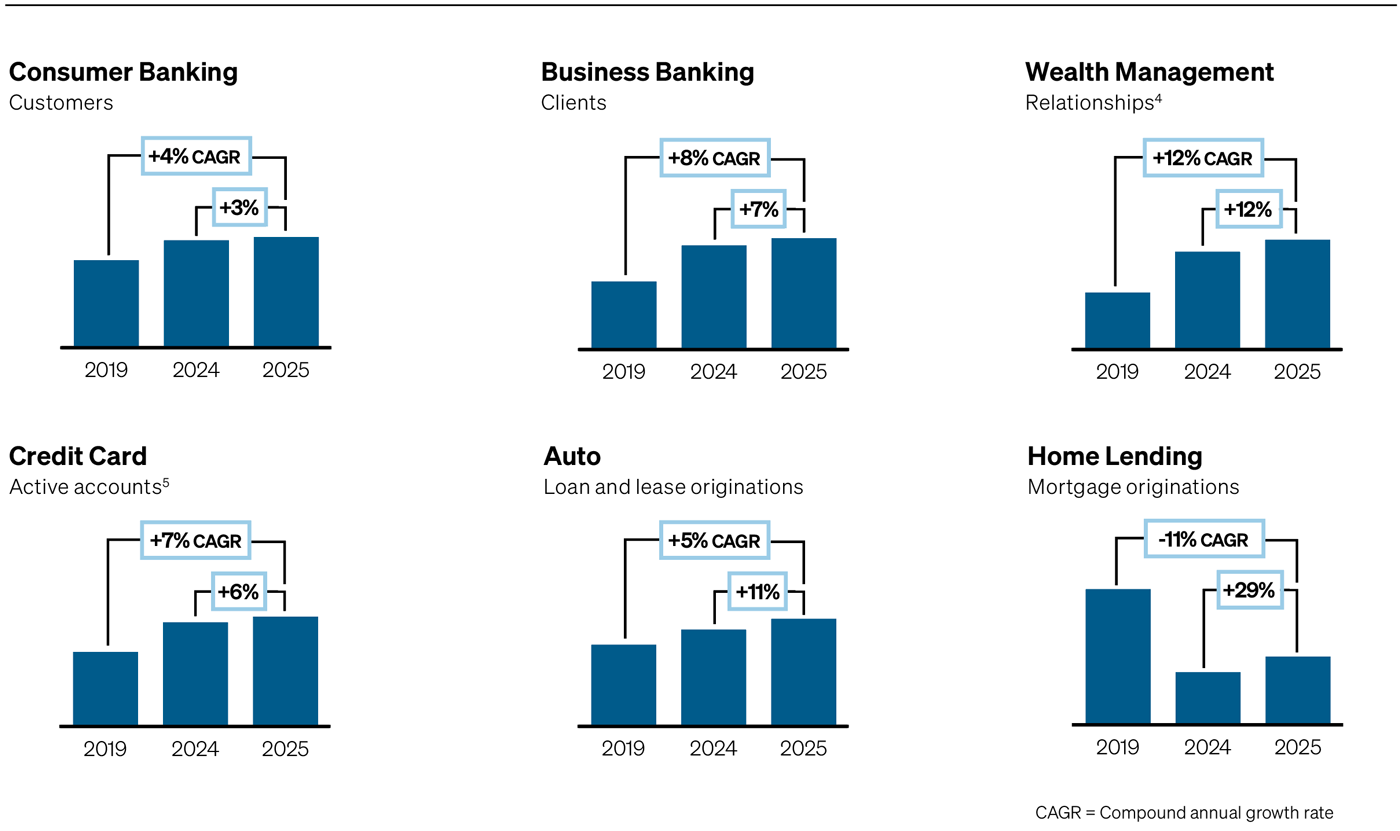
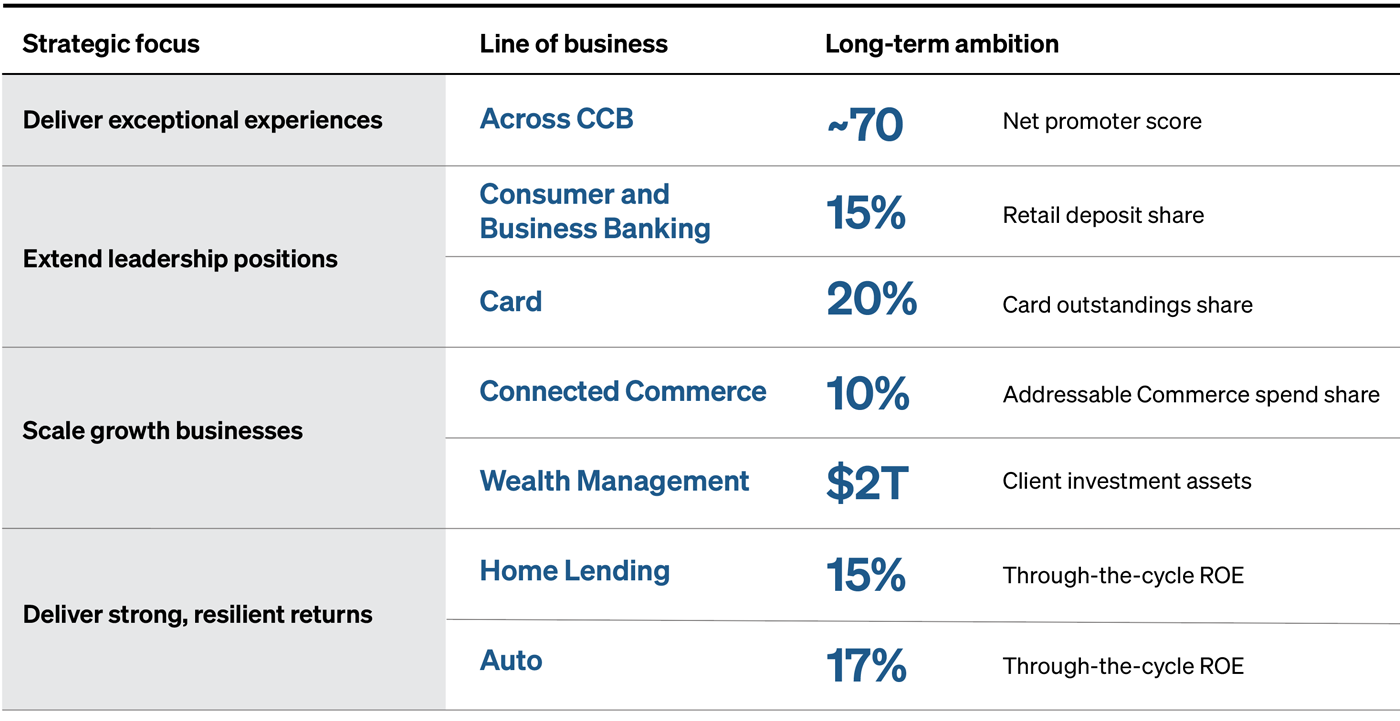
We operate in a highly competitive industry and face constant disruption, ranging from regulation and competition to the potential impacts of AI. Disruption is not new, and we have a successful track record of adapting and winning. But we are not complacent and recognize that the breadth and pace of change today is extraordinary.
Credit card legislation: The regulatory and legislative landscape is highly volatile, with continued efforts to push the Credit Card Competition Act, introduction of a new late fee bill in Congress, a call for price caps on APRs and state-level interchange actions. These are all ways of inserting price controls into the credit card industry, where consumers and merchants already have many choices, and competitive market forces are already working.
Credit cards provide significant utility to both consumers and merchants. For consumers, they offer flexible, unsecured credit to manage everyday expenses and financial needs. They are also incredibly valuable for the merchant ecosystem as they improve conversions, increase basket sizes and offer a safer, cheaper alternative to other payment methods such as cash. Providing this credit comes with real costs and risks, and many of the current legislative proposals fail to account for these financial realities. We share the consensus view that these proposals would have an overwhelmingly negative impact on consumers, businesses and the economy as a whole.
We continually plan for a wide range of potential scenarios and will respond strategically and thoughtfully. We’re familiar with responding to disruption in all its forms, but it’s important that the utility of credit cards is not legislated away because a growing credit card market is good for the economy overall.
Open banking and data sharing: JPMorganChase supports open banking. In 2025, we helped more than 32 million customers share their data with more than 15,000 apps. Our data APIs are called nearly 2 billion times per month (over 700 calls per second). We believe consumers should have control of their data and its use, and data shared should be fit for purpose, permissioned only for what is intended and not siphoned off for secondary commercial purposes. Unfortunately, consumers don’t have full control as too many disclosures provide an all-or-nothing approach to data-sharing and customers don’t know that their data is being commercialized – a problem that we believe will only be exacerbated in an agentic world. We have successfully addressed this problem with win-win commercial agreements that create clear, common-sense customer disclosures, incentives for data harvesters to minimize the data they collect from customers and shared investment in the ecosystem to protect customer data.
Payments and lending innovation: Payments are core to everything we do because they are core to everything customers do. We saw $7 trillion in payments volume last year, growing at an 11% rate since 2019 (up 9% year-over-year). The payments landscape is increasingly dynamic, with rapid innovation in new payment methods reshaping how customers transact. We continue to invest in a suite of payments and lending options to give customers flexibility in how they pay and borrow.
Trust & Security — We’re relentlessly focused on driving bad actors out of the payments ecosystem and investing in new capabilities to strengthen customer protections. This includes blocking higher-risk transactions that originate from social media on the Zelle® platform. Additionally, we are rolling out new authentication methods, such as improved models to detect suspicious logins, passkeys for logins on Chase.com and verification of higher-risk transactions within the Chase app. As a result of ongoing efforts, we’ve seen a 21% year-over-year reduction in fraud and scam claim rates across payment methods.
Payments innovation — To continue to facilitate new, secure payments solutions, we’ve expanded PazeSM, a digital wallet created in partnership with Early Warning Services. There are 42 merchants signed, of which 31 are live today. Additionally, as announced, we plan to deliver fast and reliable cross-border money movement using Zelle by leveraging stablecoins to send international payments.
Lending innovation — We’ve seen strong customer adoption across our range of Pay Over Time® solutions, with more than 6 million customers totaling $10.8 billion in originations. Customers have responded very favorably to our offerings, and we just ranked #1 in J.D. Power’s Buy Now Pay Later Satisfaction Study.
We continue to invest in improved solutions so customers keep coming to Chase for all their payment needs.
Nontraditional competitors: Our focus is on competing at a granular level — not as a monolithic consumer franchise. We compete nationally and also locally — and at the level of strategic business units, such as branch banking, premium card, advised wealth management and so on. We operate in highly competitive markets and see traditional competitors expanding their branch networks and reach, fighting harder to capture relationships and spend among affluent clients, and integrating AI to elevate offerings and experiences.
In addition, big tech and fintech competitors have continued to scale across domains such as payments and investments, which they use as a wedge to expand into core financial services relationships. This isn’t a new playbook, but as time progresses, nontraditional competitors are building deeper relationships, predominantly with younger and lower-income segments.
Chase continues to be a top choice across products and customer demographics, including with these customer segments. To date, we’ve been successful in our ability to generate outperformance, and we’ll keep doing what we know works, like building branches, deepening into investments, and driving payments and lending innovation. But we recognize that what made us successful in the past may not be sufficient in the future, and so we’re leaning into disruption by reimagining customer experiences and delivering on segmented propositions — all with greater speed.
AI transformation: AI adoption is growing rapidly. This is a massive opportunity, and we see benefits everywhere. We delivered a nearly 60% increase in value from AI and machine learning (ML) year-over-year and are supercharging teams’ productivity. Operations is at the tip of the spear, where we announced an objective to achieve more than 40% gross productivity efficiency by 2030, and we’re already on track to outperform. There are similar opportunities across CCB. We have mature use cases leveraging predictive AI/ML in credit, operations and fraud, and we are expanding this with an increased focus on agentic capabilities in coding, marketing, sales optimization, pricing and personalization. Enabling this, our data is in the cloud, already fit for purpose and readable by humans and predictive AI — and more of our important data is streaming real-time for consumption by generative AI.
AI is also transforming consumer behavior. People are switching from clicks to conversations, changing how they discover brands and products, how they shop and how they pay. We’re leveraging our valuable data assets to personalize experiences across all our channels — based not only on the relationships customers have with us but also what is contextually relevant to them in the moment. Going forward, we’re embedding generative and agentic AI capabilities to further elevate these interactions.