Rising housing costs and limited supply have made it harder for millions of Americans to find housing they can afford. Meeting this challenge requires coordinated action across government, private sector, and nonprofit organizations.
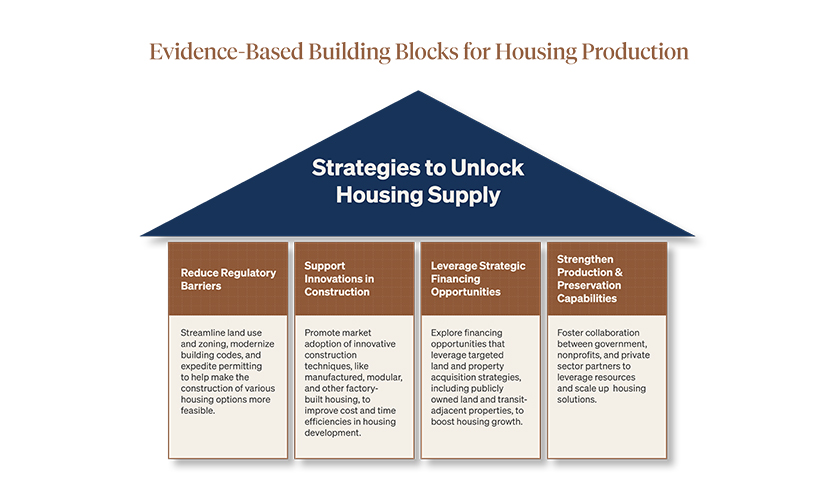
The JPMorganChase PolicyCenter's Building Blocks: State and Local Opportunities to Increase Housing Supply series highlights practical, evidence-based actions that help expand housing supply and improve access to homeownership.
Each brief will examine a distinct lever, from regulatory reform to construction innovation, and offers real-world examples to guide state and local leaders. These recommendations reinforce one another to strengthen the conditions needed to expand housing supply and improve affordability.
Featured briefs
Brief 1: Reducing regulatory barriers to expand housing supply
Up to 40% of multifamily and 25% of single-family development costs can come from state and local regulatory compliance, slowing production and driving up prices. The first paper in the series examines how complex and fragmented regulatory environments limit the type, quantity, and location of housing production, as well as opportunities to remove unnecessary complexities and streamline approval processes.
This brief highlights three evidence-based reforms to help unlock supply:
- Reform land use and zoning rules to allow more types of housing, including “missing middle” options like townhomes and duplexes
- Update building codes to support faster, more cost-effective construction while maintaining safety and quality
- Streamline permitting to improve transparency, speed up timelines, and reduce delays
Brief 2: Unlocking housing affordability through innovative construction
Construction costs represent an estimated 64% of home prices in recent analyses, and high labor and material costs are deepening the affordability gap. The second paper examines how innovations in homebuilding—manufactured, modular, panelized, and other industrialized methods—can help address part of the affordability and supply gap.
This brief highlights three evidence-based reforms to help unlock supply:
- Create an enabling regulatory environment that aligns land use and zoning, building codes, and inspection processes to put off-site and site-built housing on equal footing.
- Increase public incentives that reduce financing friction, aggregate demand, and support multi-year pipelines to promote scale.
- Build implementation capacity by training plan reviewers and inspectors, expanding the workforce, and developing a credible evidence base for market adoption.
Looking Forward
There is no single solution, but these strategies together offer a meaningful way to improve housing supply and affordability. As the Building Blocks series continues, JPMorganChase remains committed to responding to how our business, clients, and the communities we serve experience affordability challenges and to advancing evidence-based recommendations to better deliver housing affordability for households across the U.S.