By Kim Justen
On June 28, 1969, 18-year-old Mark Segal was inside the Stonewall Inn when the lights went out — an abrupt cue that the night had taken a turn. “I had to ask the person next to me what was happening,” he remembers. The answer came back, matter-of-fact: “Just another raid.”
But this raid didn’t stay routine. People surged in, tension spiked, and the night ignited into six days of protest. Afterward, when the LGBTQ+ community needed each other, they gathered in Christopher Park across the street — turning a corner of Greenwich Village into a permanent landmark in American history.
Telling a story
In 2016, the Stonewall area was designated as a U.S. National Monument. But while it soon became a destination for visitors, it didn’t have a dedicated visitor center. Ann Marie Gothard and Diana Rodriguez believed that needed to change — the park, they argued, needed a space where visitors could learn about the Stonewall story. To that end, they decided to raise funds for an independently owned and operated Visitor Center.
“Telling the Stonewall story was very important, because this isn't a history that's found consistently,” says Rodriguez, CEO of Pride Live and co-founder of the Stonewall National Monument Visitor Center (SNMVC). “In schools, in libraries, online, you will find a lot of inconsistencies about our legacy here. We wanted to present this factual history in the place where it happened.”
The two women were lucky enough to have first-person accounts of what happened that night from people like Mark Segal, who were there. The Visitor Center, which opened on June 28, 2024, highlights that history. It occupies half of the original bar, which became a focal point during the unrest.
As the country approaches its 250th anniversary, Gothard, President of Pride Live and co-founder of the SNMVC, and Rodriguez want to make certain LGBTQ+ history is represented as well. “I don’t want people 100 years from now to look at the official documents and recordings of the celebration and not see all of America represented,” says Rodriguez. “I want it to show the full breadth of the country, including us.”
A partnership as strong as the movement
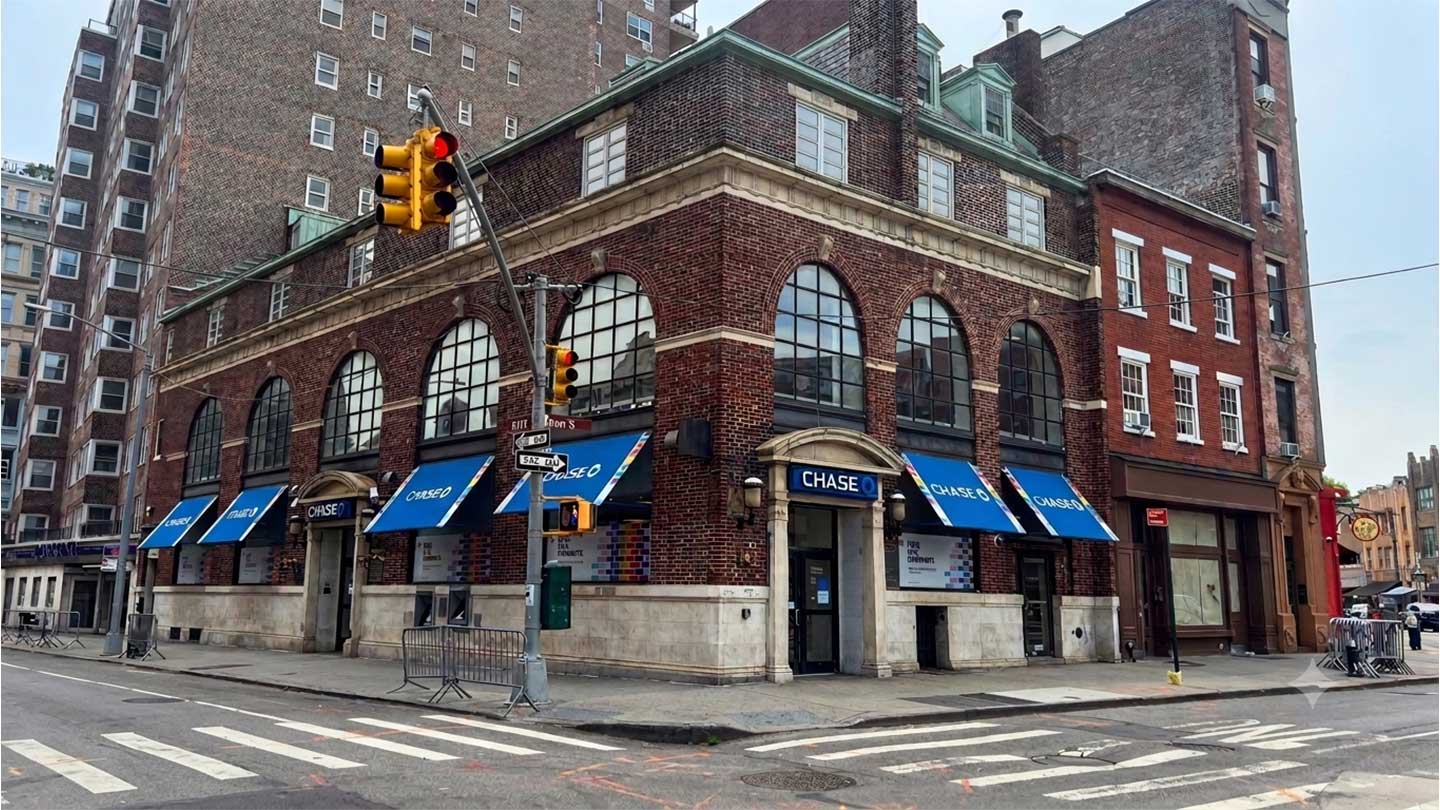
Even before the Visitor Center, JPMorganChase was active in the community through its prominent Stonewall branch, which proudly features rainbow awnings, linking it to the LGBTQ+ community. “It’s the one place where we always honor what happened there,” says Brad Baumoel, Global Head of LGBTQ+ Affairs at JPMorganChase. “Our rainbow awnings are permanent. It’s not just that way for Pride Month.”
When Gothard and Rodriguez began work on developing a Visitor Center, JPMorganChase was one of the founding partners. “Helping them was important because they needed corporate sponsorship to pull off a very ambitious mission,” recalls Baumoel.
Since then, the partnership between JPMorganChase and SNMVC has continued to grow. “We’ve stayed with them in times where others are struggling to stay in the same business of sponsorships,” says Baumoel, noting that the partnership goes beyond financial support.
The partnership also delivers meaningful value back to JPMorganChase. Through its ongoing engagement with the SNMVC, the firm creates opportunities to deepen connections with employees, clients and the broader community through private events and activities.
Employees are able to experience the space firsthand — connecting personally with the history and significance of Stonewall — while clients and partners are welcomed into a setting that reflects the bank’s values and commitments.
Located steps from the Chase Stonewall branch, the Visitor Center reinforces a visible, everyday connection to the community, strengthening JPMorganChase’s local presence in a way that is both authentic and enduring. Brad adds, “We find opportunities to remind people of what the Visitor Center does, by bringing them with us to share their message.”
Last year, the firm invited Gothard and Rodriguez to share its booth space at the Out + Equal Workplace Summit in Seattle, Wash., which attracts over 4,000 people annually. JPMorganChase also invited them to use its booth at World Pride 2025 in Washington, D.C. for two days. “We gave them our entire space at World Pride as well as a prominent section of our Out & Equal booth in their exhibition hall for Diana and Ann Marie to talk to people about Stonewall,” says Baumoel. “That opened up a global audience for them.”
In June 2024, Chase and the Chase Sapphire Card hosted a SNMVC pre-launch event at the South Street Seaport in New York. Rodriguez spoke at the event, as did Segal, and NewFest — New York’s largest LGBTQ+ film festival — screened a film about Stonewall. “There were hundreds of people in the room, and they got to network and spend time with all of them. It was kind of amazing,” says Baumoel.
Stonewall continues bringing the community together
As for SNMVC, it’s becoming increasingly active in the community. This year, it’s working to deepen engagement with New York communities and schools, LGBTQ+ youth organizations, senior groups and within immigrant communities.
Part of that outreach is allowing local groups to use the space for events free of charge. “We just want community groups to have a safe space to run their events,” Rodriguez says. “We’re also working to get groups who are coming to New York City for a specific event or conference to visit.”
And the community is also active inside the SNMVC. “We wanted to make sure the next generation had a voice in the content programming at the Visitor Center as well,” says Gothard. To that end, each year, the Visitor Center hosts a Parsons School of Design Student Exhibit, showcasing LGBTQ+ individuals’ and allies’ experiences.
Baumoel and the Visitor Center continue to work together to find opportunities for partnership. “We’re proud of what we do here,” says Baumoel.
Segal agrees. “JPMorganChase was one of the first organizations that understood the importance of the Visitor Center. What they didn’t realize was they were creating a place that represented freedom and equality.”
It’s a message that’s as important today as it was in 1969.