One month after graduating from community college, Alice Marquez’s Southern California childhood home went to auction after her family could no longer afford the mortgage. They lost the house—and 20 years of memories. Her sister took in their grandparents and brother, while Alice and her now‑husband, Alfred Romero, moved into his mother’s unconverted garage.
Amid the upheaval, Alice promised her grandparents: “I’m going to buy my own house one day and you’re going to come live with me.” But each search felt out of reach; online listings and realtors made the process seem daunting. Then one open house caught her eye.
“I remember seeing that house and I was like, ‘Wow, this is beautiful. It’s literally perfect,’” Alice, 29, said. “But there were so many people there, and that got me discouraged. These people are older than me, going to have more money than me, better credit…this isn’t something that could happen for us.”
Until it did.
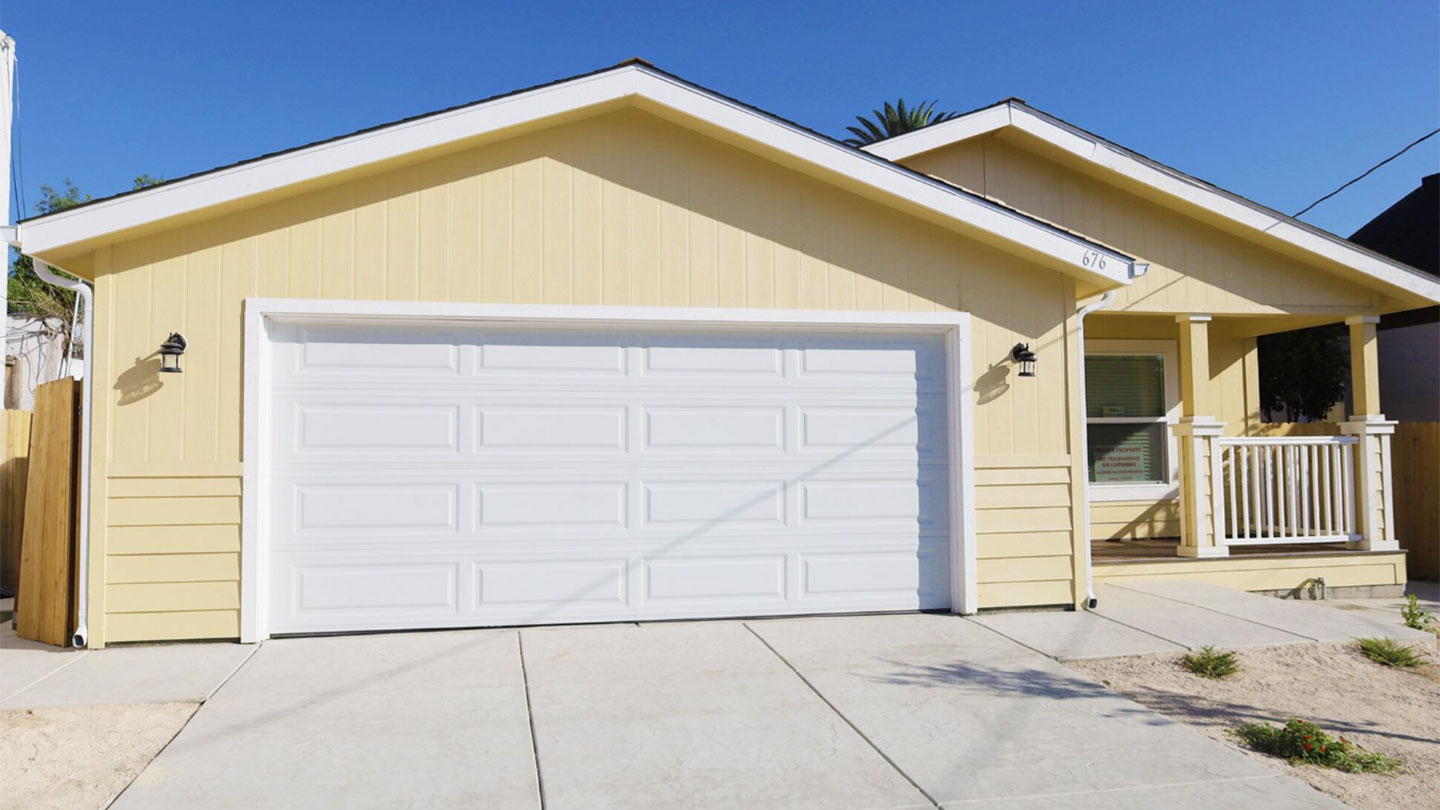
With an $8,000 downpayment—which she saved from working four part-time jobs while attending nursing school—and additional financial help from her family, Alice purchased a 3-bedroom, 2-bathroom factory-built house from the nonprofit Neighborhood Partnership Housing Services, Inc. (NPHS). With $4.5 million in philanthropic support from JPMorganChase, NPHS is helping make homeownership a reality for lower-income families in Southern California by increasing the supply of affordable and energy efficient homes.
NPHS President and CEO Clemente Mojica calls the Inland Empire—east of Los Angeles and spanning Riverside and San Bernardino counties—“the last bastion of affordability.” With more families priced out of coastal cities, NPHS is focused on building faster, lowering costs, and expanding access to stable homeownership.
Through its Homes by NPHS program, NPHS partners with manufacturers to design and build single family homes and Accessory Dwelling Units (ADUs) at off-site factories. The custom, energy efficient and wildfire-prepared homes and ADUs replace dilapidated units or are installed on vacant or undeveloped land.
It costs about 30 percent less to build the homes off-site, savings that are passed on to the homeowner, whom NPHS supports with other services, including financial counseling, mortgage loans and downpayment assistance. “No matter where anyone is on their pathway, we can help them along their journey,” said Greg O’Donnell, NPHS Chief Impact Officer.