Have you ever wondered why people make the financial decisions they do? For example, what factors do they consider when they sell a business that’s been in their family for three generations? Do they weigh the worries about letting their grandparents down against their own disappointment that their children don’t want to continue the family tradition?
Behavioral science strives to answer these questions. Essentially, it uses psychology, economics and sociology to analyze how people make decisions. It’s long been used in fields like healthcare and technology, but some innovative financial firms are now turning to this discipline to help clients better understand the psychology behind the decisions they make about money and life.
At JPMorganChase, behavioral science is already making a meaningful difference—especially for high-net-worth clients and the teams who serve them. For example, it helps clients and advisors recognize that financial decisions aren’t just about numbers; they’re about emotions, family and identity.
Meet the resident expert
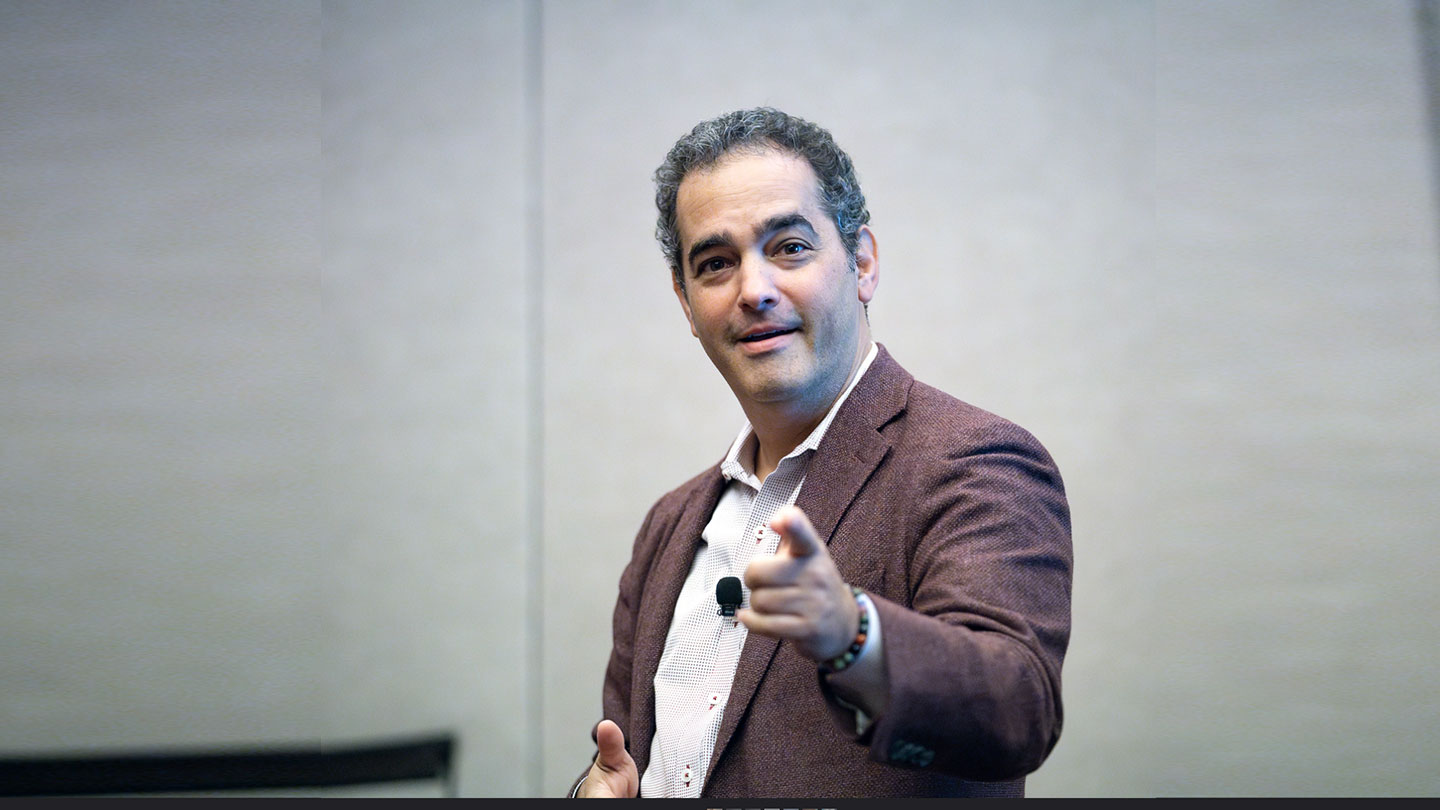
Jeff Kreisler, J.P. Morgan’s first head of Behavioral Science, recognizes the powerful role emotions play in shaping financial decisions. He joined the bank in 2020 after following a very unconventional career path: a Princeton-educated lawyer who didn’t find his calling in the legal field, he pivoted to standup comedy and made a living at it. In the ensuing years, a close friend working at TheStreet.com, asked if he’d be interested in writing a weekly humor column about business. Eventually, Dan Ariely, one of the leading thinkers in behavioral science, read some of Kreisler’s work and invited him to lecture at his class at Duke. That led to them co-authoring Dollars and Sense, a book about how people misthink money decisions and how they can spend smarter.
By that point, Kreisler knew behavioral science was his calling: “Comedy, law and behavioral science basically look at a situation, break it down into its basic elements and then tell a story to get a laugh, support a client or, hopefully, explain what’s really going on,” he says.
Kreisler and his small team built the bank’s behavioral science practice from the ground up with a single goal in mind: to lift the curtain on the complex, often unspoken factors that influence financial choices.
“We’re not here to do some secret behavioral science magic,” Kreisler says. “We’re just acknowledging that money decisions are emotional for everyone—including us—and if we talk about them openly, we can help people make choices they actually feel good about.”
Common biases like loss aversion (fearing losses more than valuing gains) and optimism bias (believing the future will always be better) can cloud judgment. By recognizing these patterns, J.P. Morgan advisors strive to provide guidance that helps clients avoid pitfalls and make decisions that align with their goals.
It starts with trust
J.P. Morgan’s advisors start with a commitment to building trust. Kreisler describes trust as having three pillars: honesty, ability and benevolence. “At the end of the day, trust isn’t just about being honest or knowing your stuff; it’s about showing clients you’re genuinely on their side,” he explains. “If they feel you’re really looking out for them, that’s what sticks.”
This philosophy comes to life in the way advisors engage with clients. Instead of focusing solely on financial products, they’re trained to spark meaningful conversations about things like family legacy, transitions after selling a business or the emotional aspects of wealth. “Our advisors aren’t just talking numbers,” Kreisler says. “They’re learning how to really listen and understand what’s going on in our clients’ lives. With the tools we’ve built and the insights we deliver, they can have deeper conversations about family, big life changes or even just the stress that comes with having money.
It’s about meeting people where they are at a particular stage in their life and helping them make decisions that feel right.”
Clients are at the center of these efforts, and the results speak for themselves. According to a recent J.D. Power U.S. Retail Banking Advice Satisfaction Study, 76 percent of customers act on the advice they receive from their bank. When that advice is personalized, their satisfaction with the bank jumps by almost 20 percent. This kind of satisfaction isn’t just a metric; it reflects how clients feel understood and supported, leading to stronger relationships and greater loyalty.
Going beyond client discussions
J.P. Morgan doesn’t only use behavioral science for clients; it’s also embedded in how the company empowers its advisors and teams. Kreisler’s practice is built on three pillars:
- Client engagement―From prepping advisors on how to spot a client’s unique motivations and concerns to producing thought leadership pieces to help clients themselves make better informed choices, Kreisler’s team is up front in acknowledging that managing money can come with emotional challenges. The basic premise is that recognizing your own challenges is the first step towards creating systems and frameworks for better decisions and better outcomes.
- Advisor empowerment—Kreisler and his team develop tools that help advisors lean into behavioral science, whether they’re new to the field or seasoned professionals. They coach advisors on different frameworks they can use to guide client conversations around common scenarios, like sudden wealth or a major business transition. The goal is not to turn the advisor into a behavioral scientist, but to help them lean into that part of the job they do already: connecting with people in a way that makes them feel comfortable and educated.
- Financial innovation―The behavioral science team is constantly experimenting and conducting research to develop practical tools that make behavioral insights easy to use in everyday work. Creating simple, automatic resources that fit seamlessly into their busy routines helps both advisors and clients benefit from behavioral science without adding complexity. Making better decision-making second nature is the desired end product.
“Most great advisors are already using behavioral science, even if they don’t call it that,” Kreisler says. “It’s about connecting with people, understanding what’s really on their mind and helping them get where they want to go.”
The benefits of behavioral science extend beyond client relationships. JPMorganChase also applies these principles internally to foster trust, engagement and motivation among its employees. In this case, the bank focuses on shifting from purely extrinsic motivators like pay and bonuses to intrinsic motivators such as purpose, autonomy and belonging. “It’s easy to think people just show up for a paycheck, but what really keeps teams strong is feeling like you matter and belong,” says Kreisler. “We’re using behavioral science to help our employees find purpose in their work, build real connections and feel supported—whether it’s through leadership workshops, onboarding or just making sure everyone’s voice is heard.”
This approach is backed by research: According to a 2024 Gallup report, highly engaged teams have up to 23 percent greater profitability and 51 percent less turnover. Increased engagement is strongly linked to employees feeling understood, valued and connected―all of which are core outcomes of applying behavioral science.
Ahead of the game
JPMorganChase is unique for its commitment to behavioral science at scale. Few banks have dedicated behavioral science roles, and even fewer embed these insights across both client and employee experiences. “What’s exciting here is that we’re not following the crowd,” says Kreisler. “It’s pretty rare to see this kind of commitment to understanding people, and that’s what sets us apart.”
Ultimately, these efforts lead to better outcomes across the board. Clients receive more personalized advice, deeper trust and long-term relationships. Employees benefit from a more supportive, engaging and purpose-driven workplace. And, for the bank as a whole, behavioral science drives innovation, strengthens culture and ensures that JPMorganChase remains a leader in understanding and serving people—not just numbers.
“At the end of the day, this isn’t just a nice-to-have, it’s a need-to-have,” Kreisler notes. “It’s how we build real trust and lasting relationships, both with our clients and with each other. Behavioral science helps us see the whole person, not just the numbers. That’s what makes JPMorganChase a place where people want to work and clients want to stay.”
LEARN MORE ABOUT OUR FIRM AND INVESTMENT PROFESSIONALS
INVESTMENT AND INSURANCE PRODUCTS ARE:
- NOT FDIC INSURED
- NOT INSURED BY ANY FEDERAL GOVERNMENT AGENCY
- NOT A DEPOSIT OR OTHER OBLIGATION OF, OR GUARANTEED BY, JPMORGAN CHASE BANK, N.A. OR ANY OF ITS AFFILIATES
- SUBJECT TO INVESTMENT RISKS, INCLUDING POSSIBLE LOSS OF THE PRINCIPAL AMOUNT INVESTED
J.P. Morgan Wealth Management is a business of JPMorgan Chase & Co., which offers investment products and services through J.P. Morgan Securities LLC (JPMS), a registered broker-dealer and investment adviser, member FINRA and SIPC. Certain advisory products may be offered through J.P. Morgan Private Wealth Advisors LLC (JPMPWA), a registered investment adviser. Trust and Fiduciary services including custody are offered through JPMorgan Chase Bank, N.A (JPMCB) and affiliated trust companies. Insurance products are made available through Chase Insurance Agency, Inc. (CIA), a licensed insurance agency, doing business as Chase Insurance Agency Services, Inc. in Florida. JPMS, CIA, JPMPWA and JPMCB are affiliated companies under the common control of JPMorgan Chase & Co.
The testimonials are the sole opinions or experiences of those featured and not those of JPMorgan Chase Bank, N.A. or any of its affiliates. These opinions or experiences may not be representative of what all may achieve. JPMorgan Chase Bank, N.A. or any of its affiliates are not liable for decisions made or actions taken in reliance on any of the testimonial information provided.