JPMorganChase client was told in advance that they would be featured in advertising.
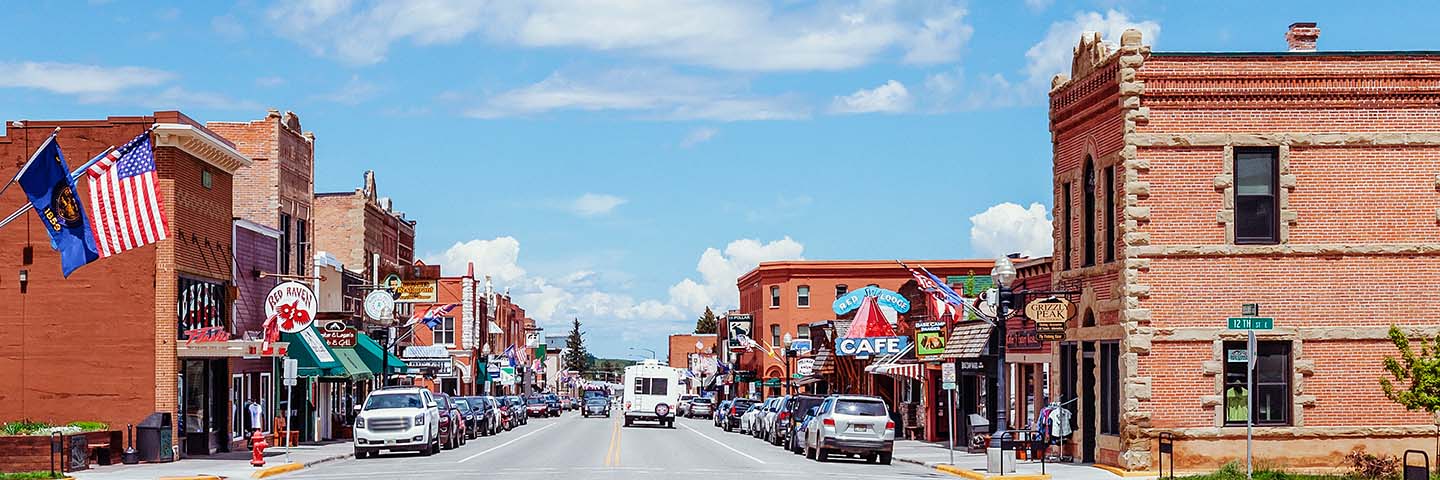
In recent years, Alabama has emerged as a national destination for business growth, home to companies in sectors as varied as healthcare, aerospace, steel, and food and beverage.
Powering this development are small businesses—the backbone of local economies. Across Alabama, they represent 99.4 percent of all businesses.
But Alabama entrepreneurs will tell you that they’re facing big challenges that can impact their ability to grow. Small businesses often experience difficulties accessing the capital and financial services they need to evolve and scale. In Alabama, this is particularly acute for those seeking less than $100,000 in capital.
Deploying capital where it’s needed
Across the state, JPMorganChase is supporting Alabama’s small business owners—from start-up to launch and beyond—with financial resources and mentorship. We serve over 27,000 Alabama-based business clients of every size, in industries like defense and aerospace, machine and equipment manufacturing, healthcare, and higher education.
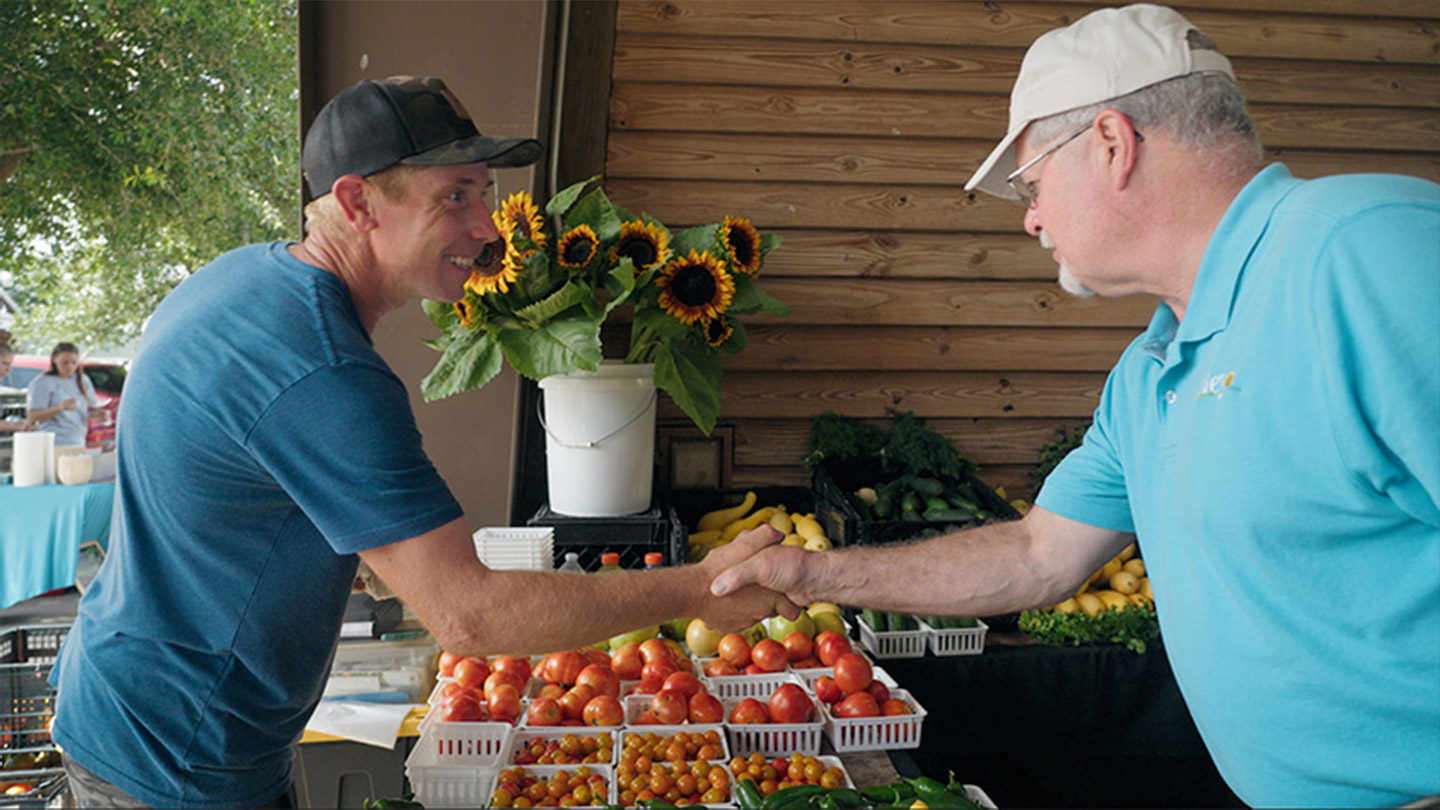
In Foley, Alabama, on the Gulf Coast, we’ve supported the Coastal Alabama Farmers and Fishermens Market. The market has a vendor directory of more than 200 small local businesses that rotate through its facility throughout the year selling food sourced locally—everything from fruits and vegetables from nearby farms to baked goods to fresh seafood from the Gulf.
In 2025, we announced a commitment of $2 million in philanthropic capital to create the Alabama Capital Access Collaborative (ACAC), an initiative whose mission is to make it easier for local small businesses to access capital.
The ACAC offers technical assistance to lenders, then connects small businesses to these lenders so they can access and efficiently deploy the capital they need.
“Small businesses are the backbone of Alabama’s economy, and when they grow, communities do, too,” said Victoria Adams Phipps, Vice President, Global Philanthropy at JPMorganChase. “With the Alabama Capital Access Collaborative, we’re teaming up with partners to help local business owners get past financing hurdles, secure the resources they need, and build lasting opportunities right here in Alabama.”
We’re also helping Birmingham-based businesses grow their revenue and operations through a cohort program that launched in 2024. Called “Beyond the Middle” and run by The Capital Collective, the program provides coaching for businesses with high potential for growth beyond $10 million. Among the 12 participating businesses from the first cohort, within five months eight secured a total of $8.1 million in growth capital, two scaled to the next level without growth capital, and all experienced 20% in average revenue growth. In addition, they created 54 new jobs. The second cohort launches this year.
A market by and for the community
Civic leaders established the market in the wake of the 2010 Deepwater Horizon oil spill, which devastated the region. “The idea was to create a place of self, of community,” says Foley Mayor Ralph Hellmich. JPMorganChase provided a $2.6 million New Markets Tax Credit equity investment to support the project.
Open year-round, the market has become a local hub that represents the heart and soul of Foley. It’s as much a place to catch up with neighbors as it is a showcase for the local, sustainable bounty of land and sea. The market also serves as a kind of incubator for the region, says Hellmich: “People have started with their ideas here and gone on to create a restaurant or a food vendor business somewhere else.” A salsa company and a bakery are among them.
The market has been ranked by both Newsweek and USA Today as one of the nation’s best. Yet its importance to Foley goes even deeper than the superb quality of its foods and other artisanal products. The small businesses of the Coastal Alabama Farmers and Fishermens Market strengthen the community and celebrate its traditions. Visit on a weekend morning and you see this everywhere—the vendors greeting their customers by name, the retirees socializing over coffee in the shade of the market’s roof, and the neighbors catching up on the latest gossip. You see it in local offerings, like Gulf shrimp, that contribute to sustainability and the livelihoods of small fishermen. And you see it in a new generation of small farmers carrying forward the traditions of their forebears.
“When you’re supporting local vendors, that money stays in your community [and] you’re keeping small business alive,” says the market’s manager, Alescia Forland, herself a third-generation farmer in the county. “We want everybody to feel connected to each other.”
Learn more about how JPMorganChase powers economic growth in Alabama at https://www.jpmorganchase.com/communities/alabama.
Deposit products provided by JPMorgan Chase Bank, N.A. Member FDIC. The testimonials are the sole opinions or experiences of those featured and not those of JPMorgan Chase Bank, N.A. or any of its affiliates. These opinions or experiences may not be representative of what all may achieve. JPMorgan Chase Bank, N.A. or any of its affiliates are not liable for decisions made or actions taken in reliance on any of the testimonial information provided.