
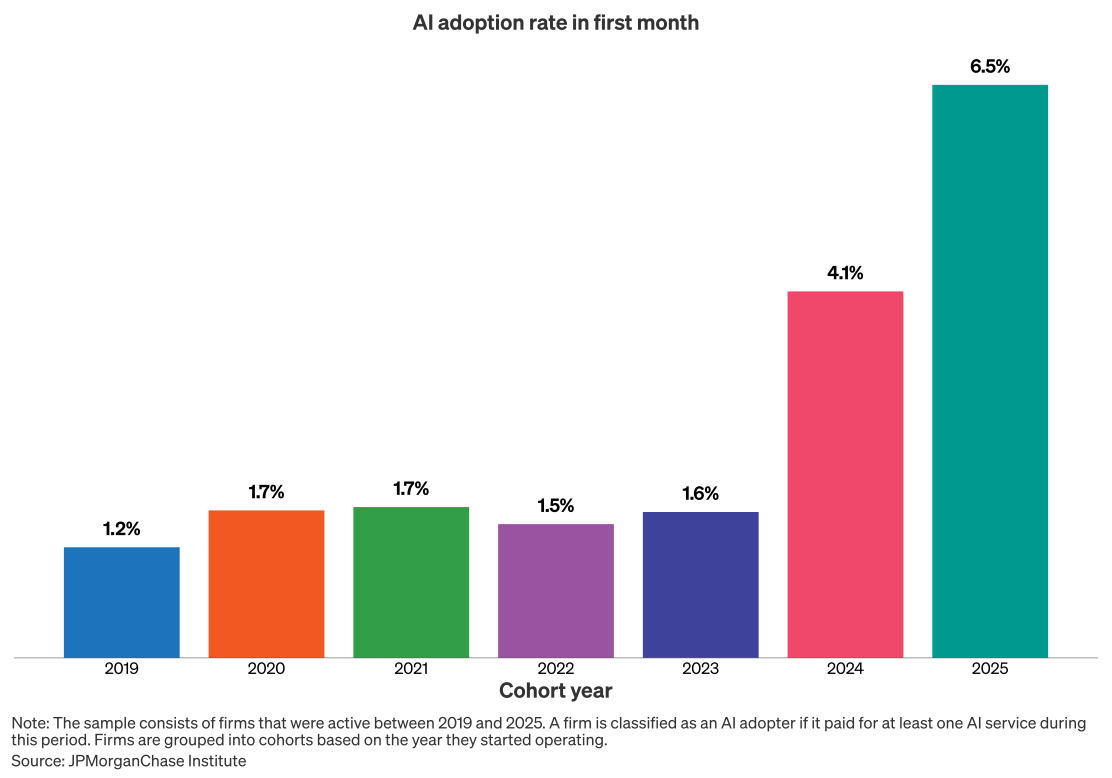
Figure 1: Newer business cohorts were more likely to incorporate AI from the onset.

Creating thriving communities together
See how our clients and partners—from small business owners to workforce training leaders—work with JPMorganChase to drive meaningful impact and economic growth where they live and work.
Learn moreLatest news

Veteran’s Unconventional Path to Landing her Dream Job in Tech
U.S. Army Veteran Ashley Wigfall transitioned to a civilian role and charted her path to technologist through mentorship and skills training at the JPMorgan Chase tech hub in Plano, Texas.
Learn more
Research
Understanding the use of AI among small businesses
April 14, 2026
Small businesses have historically lagged behind larger enterprises in adopting new technologies due to resource constraints and integration challenges. As artificial intelligence (AI) tools became widely accessible in recent years, questions emerged about whether this technology would follow similar patterns and whether small businesses would be able to benefit from it. Using de-identified Chase Business Banking transaction data, this report—the first in our Small Business in the Age of AI research series—tracks payments to AI services made by small businesses from 2019 through 2025, providing an objective measure of adoption behavior across the small business sector.
This report examines when small businesses adopt AI, how their spending evolves, and which firm characteristics are associated with adoption. Our transaction-based methodology captures actual purchasing behavior across the full spectrum of AI technologies—from specialized tools to general-purpose services—revealing adoption patterns and spending dynamics that would be difficult to discern in survey-based research that relies on self-reported usage. We establish a set of findings:
Key findings
These findings show how declining costs lowered barriers to AI adoption and improved accessibility, enabling an unprecedented speed of diffusion compared to previous technologies like electricity, personal computers, and the internet. The transition from sporadic to consistent usage combined with service diversification suggests that many small businesses are moving beyond initial experimentation toward more sustained integration of AI into their operations. However, substantial adoption gaps persist. Employer firms consistently outpace nonemployers regardless of revenue, while knowledge-intensive industries show significantly higher adoption than labor-intensive sectors.
For policymakers, these patterns indicate that while lower entry costs have increased access, broader adoption may require addressing skills gaps through AI skills training, building trust through transparency and responsible adoption frameworks, and ensuring a robust ecosystem of AI service providers that can meet diverse business needs.
When new technologies emerge, businesses face decisions about whether and when to adopt them. These adoption patterns reflect the resources, capabilities, and competitive pressures that shape business operations. Historically, small firms have adopted new technologies more slowly than their larger counterparts, facing barriers including capital constraints, limited technical expertise, and integration costs that large enterprises can more readily absorb (NFIB 2025; OECD 2024; Acemoglu et al. 2023). These adoption delays have implications for competitive dynamics, as technology gaps can compound existing resource disparities between firms of different sizes.
With the rapid expansion of artificial intelligence tools in recent years, small businesses face both opportunities and challenges. AI tools promise productivity gains through task automation, enhanced decision-making through data analysis, and competitive advantages through improved customer engagement. Yet questions remain about whether and how these benefits are reaching businesses. Understanding which businesses adopt AI, when they adopt, and how their spending evolves provides essential initial insight into whether this technology is broadening access to productivity-enhancing tools or replicating historical divides based on firm resources and capabilities.
This report examines how small businesses have engaged with AI technologies in recent years. We leveraged a unique dataset of de-identified small businesses with Chase Business Banking deposit accounts, tracking them from 2019 through 2025 across the main industries relevant to the small business sector. Our measurement approach identifies businesses as AI adopters or users when they make payments for AI-related services, capturing both specialized AI tools such as marketing automation AI platforms and general-purpose AI services such as generative AI platforms. This transaction-based methodology provides objective evidence of actual purchasing behavior rather than self-reported intentions or aspirations captured in traditional survey approaches. Our sample enables analysis of AI payment patterns across business cohorts and over time, as well as by employer status, revenue size, and industry. See Box 1 for details on how we identified AI services and adopters.
Box 1: Classification of AI adopters |
|---|
We identify businesses as AI adopters or users when they make payments for AI-related services based on the most widely accepted definition of an AI service during a specific year. 1 This captures both specialized AI tools such as marketing automation AI platforms, which were more ubiquitous in the early years of our sample, and general-purpose AI services such as generative AI platforms, which have become more popular in the later years of our sample. We identified more than 500 AI tools used during our sample period, which we grouped by the type of service. Our sample includes 4.6 million firms operating during 2019-2025. Our analysis focuses on paid AI services and does not capture free tool usage or custom developments. Our methodology also does not consider AI features that may be embedded within other non-AI applications. This approach provides clear evidence of businesses making explicit financial commitments to AI technologies. However, it may understate actual usage of AI tools. We define a small business as an AI adopter if it has ever paid for an AI service; this is a cumulative measure—once a business becomes an adopter, it always counts as one. In contrast, a small business is considered a user if it pays for an AI service during a specific period. All users are adopters, but not all adopters are users in every period. |
Newer firms were more likely to adopt AI at the outset and ramp up more quickly: The 2025 cohort reached a 10 percent adoption rate in six months, compared to over six years for the 2019 cohort.
AI adoption among small businesses has shown a steady upward trend between 2019 and 2025, with a notable uptick in adoption beginning around 2023.2 However, sector-wide adoption rates can obscure insights about when firms adopt AI during their lifecycles. We examined how quickly businesses adopted AI services at formation and over their early years.
Figure 1 shows the share of small businesses in each cohort that had already adopted AI when they started operating.3 Only 1.2 percent of the 2019 cohort had adopted AI at the onset, and the 2020−2023 cohorts showed similar initial adoption rates in the 1.5−1.7 percent range. The pattern then shifted dramatically: the 2024 cohort began at 4.1 percent and the 2025 cohort at 6.5 percent. This represents more than a four-fold increase in initial adoption rates over just six years.
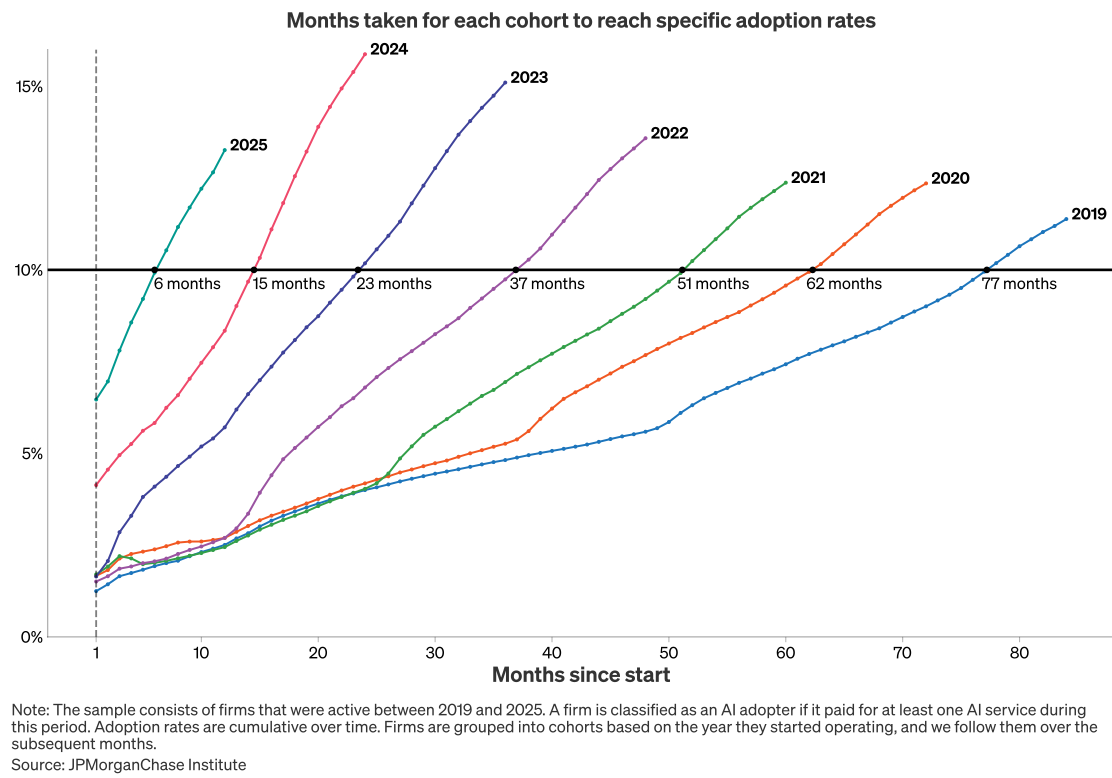
Figure 2 displays the time required for 10 percent of each cohort to adopt AI. The 2019 cohort required 77 months to reach this level, i.e., more than six years. The 2020 and 2021 cohorts showed modest improvements, reaching 10 percent in 62 months and 51 months, respectively. The acceleration intensified starting with the 2022 cohort, which reached 10 percent in 37 months, followed by the 2023 cohorts at 23 months. The most recent cohorts showcased the full extent of this acceleration: the 2024 cohort reached 10 percent adoption in just 15 months, while the 2025 cohort achieved this milestone in approximately six months. To put this in perspective, the 2025 cohort reached 10 percent adoption rate almost 13 times faster than the 2019 cohort—in just six months compared to over six years for its 2019 predecessor.
This cohort-based acceleration represents unusually rapid technology diffusion compared to previous general-purpose technologies, which historically required decades to achieve comparable penetration.4
Several interconnected factors may explain this acceleration in adoption. First, the November 2022 launch of generative AI models marked a turning point in AI accessibility, demonstrating AI capabilities to a broader audience.5 Second, cost barriers declined simultaneously: new AI services became available with low-cost subscriptions, contrasting sharply with previous technologies such as personal computers (PCs) and the internet, which required substantial capital expenditure to purchase expensive hardware and internet service contracts (Brynjolfsson, Li, and Raymond 2025). Third, AI services delivered through cloud-based platforms eliminated technical expertise requirements that previously limited adoption (OECD 2024). Fourth, knowledge diffusion accelerated in the last few years through vendor support and peer networks.6 Fifth, the maturation of the ecosystem enabled the newest cohorts to adopt refined products with demonstrated business applications rather than experimental tools lacking proven use cases.7
In recent years, small businesses have consistently paid for AI, using a wider range of services than before.
While the pace of AI adoption shows how quickly small businesses are embracing it, an equally important question is how deeply they are integrating it into their operations. We examine two indicators of depth: whether businesses pay for AI consistently over time and whether they use multiple types of AI services. Together, these measures help us to understand whether small businesses have progressed from sporadic experimentation toward more consistent and diversified AI use across their business operations.
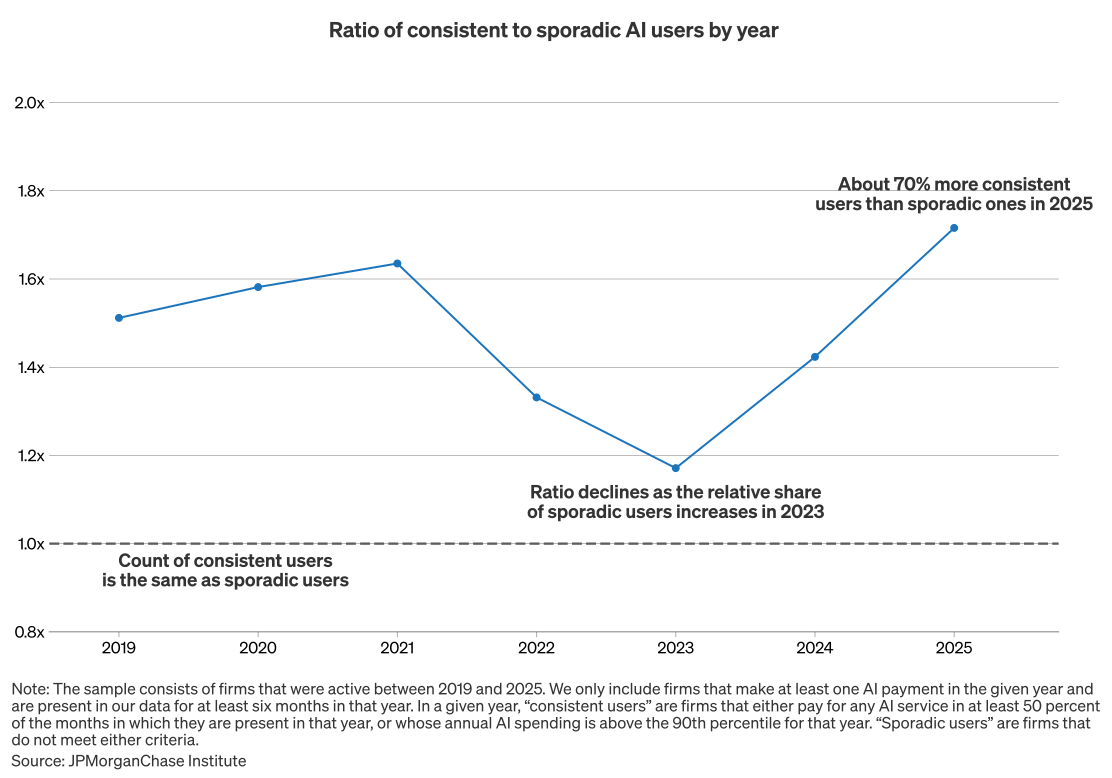
Figure 3 shows the ratio of consistent AI users to sporadic AI users among small businesses from 2019 to 2025, where users were categorized based on payment frequency and transaction amount paid for AI services.8 The ratio remained relatively stable between 2019 and 2021 at approximately 1.5 to 1.6, before declining to approximately 1.2 in 2022–2023. This decline coincided with a period of rapid adoption growth following the November 2022 release of generative AI models and likely reflects an influx of new adopters testing AI services with sporadic purchases rather than committing to regular subscriptions.9 The ratio then rebounded sharply, surging to nearly 1.8 by 2025, reflecting a meaningful increase in consistent users relative to sporadic ones. This climb from 2023 to 2025 may suggest that payment patterns shifted toward sustained, regular expenditures, a potential signal of operational integration taking hold across the small business sector.
These trends align with and extend findings from broader research on AI adoption. The relatively high proportion of consistent users in the early period, even when overall adoption was low, is consistent with evidence that early adopters were disproportionately innovative, growth-oriented firms making substantial organizational investments to deploy AI meaningfully, rather than casual experimenters (Acemoglu et al. 2022). The mid-period dip corresponds to survey-based research showing that, following the release of generative AI models, the majority of organizations remained in experimentation or piloting phases rather than moving to scaled deployment (McKinsey 2025). The sharp rebound through 2025 aligns with broader evidence of enterprises transitioning from isolated pilot projects to operational integration (OECD 2025). This transition toward more consistent users is also consistent with efforts to integrate AI into business operations. Research indicates that this requires substantial process innovation and organizational adaptation to realize productivity gains (Bresnahan and Greenstein 1996).10
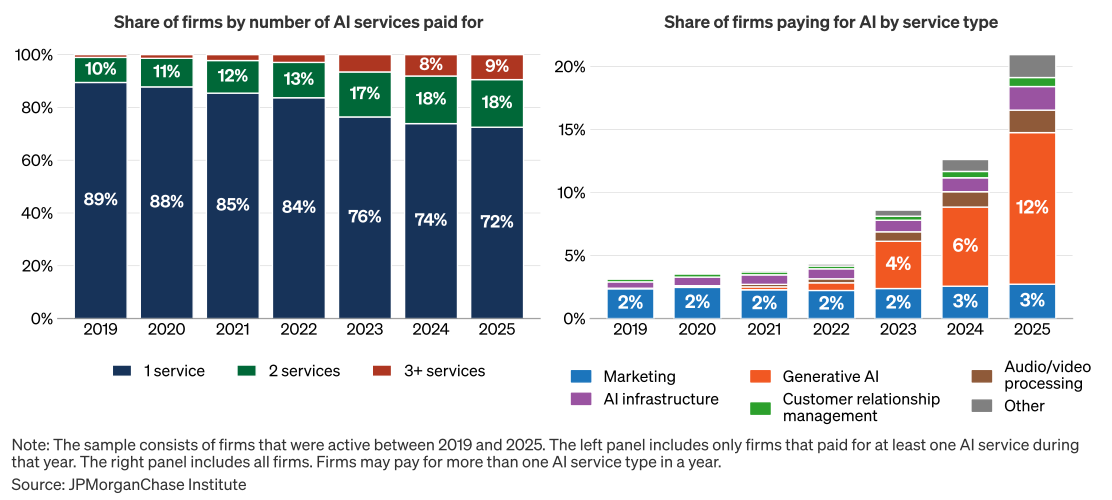
Figure 4 shows how small businesses have evolved in their AI service engagement over time, with firms both paying for multiple AI services simultaneously and broadening the types of services they paid for. The left panel shows the share of firms by the number of AI services paid for each year from 2019 to 2025, revealing that firms increasingly adopted multiple services rather than relying on single applications. The proportion of firms paying for only one AI service declined from 89 percent in 2019 to 72 percent by 2025, while those paying for two services rose from 10 percent to 18 percent, and firms paying for three or more services increased from under 1 percent to 9 percent.
The right panel displays the share of firms by services paid for over the same period, highlighting a dramatic compositional shift in the market. In the early years, AI services purchased by small businesses were limited mostly to marketing, with a smaller share toward AI infrastructure and customer relationship management. Over time, small businesses have substantially expanded the portfolio of AI services they pay for, with generative AI emerging as the dominant category and other services increasing their relative importance. Together, these results reveal a dual pattern of diversification, both in the number and breadth of AI services purchased, that may suggest that small businesses have deepened their integration of AI across business functions, consistent with a transition from targeted experimentation to broader operational deployment.
This pattern is supported by other research. Firm-level data show that firms adopting AI tend to adopt complementary technologies such as cloud computing and specialized software simultaneously, pointing to meaningful technology complementarities that amplify the value of individual tools (Acemoglu et al. 2022).11 Research on AI adoption in small and medium-sized enterprises similarly finds that successful integration depends on aligning new AI tools with existing IT infrastructure and organizational processes, with firms that achieve this alignment more likely to realize operational and competitive benefits (Schwaeke et al. 2025).
Taken together, these patterns of increased consistent payment, multi-service adoption, and service portfolio expansion may indicate that small businesses are moving beyond initial experimentation to treating AI as a part of their operational infrastructure.12 This shift appears to reflect a change in how firms approach AI purchasing, from testing isolated applications to integrating across technologies in support of core business operations. While the market remains heterogeneous, with both committed users and sporadic experimenters coexisting, the directional trends signal that AI is increasingly becoming embedded in the operational routines of small businesses rather than remaining a peripheral or experimental tool (Brynjolfsson Rock and Syverson 2021; OECD 2025).13
Newer AI adopters started out at lower spending levels, driven by accessible entry-level services, while established adopters maintained or increased spending.
As AI adoption has expanded rapidly across the small business sector and AI usage has become more consistent and wider in application, spending patterns provide another critical lens on small‑business engagement with AI services. Our longitudinal data can provide insights that may be obscured in aggregate, cross-sectional measures. We examined how spending patterns evolve both within groups of businesses that adopted AI in the same year and over time and across adoption years, and found that early adopters maintained or increased spending despite the introduction of lower-cost services.
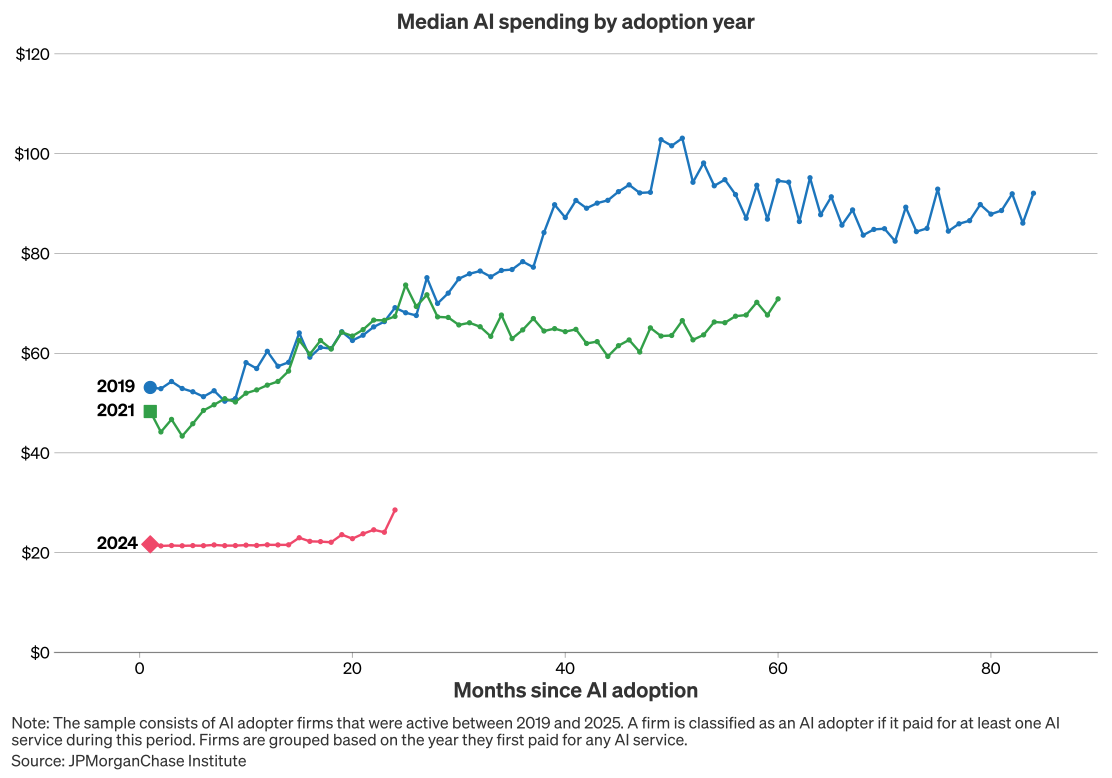
Figure 5 shows median AI spending trajectories for small businesses that began adopting AI in different years, and it reveals a systematic decline in monthly AI spending across successive adopters. Businesses that adopted AI in 2019 or 2021 entered at approximately $50 per month, while those adopting in 2024 started at $20 per month, a 60 percent reduction in entry costs over just six years.
Beyond these declining entry points, the chart shows distinct spending trajectories between earlier and newer adopters. The 2019 adopters grew spending to roughly $90 per month by 2025, an 80 percent increase over six years, while the 2021 cohort achieved approximately 50 percent growth over four years. In contrast, newer adopters entering the market in 2024 exhibited notably flatter spending trajectories, with monthly AI spending reaching $29 by 2025. Together, these patterns suggest a two-tier structure in which established adopters progressively deepen their AI spending while newer adopters enter at lower levels with more modest spending.
These results may be explained by the emergence of accessible generative AI platforms that created entry points that were previously unavailable to earlier adopters (U.S. Chamber of Commerce 2025; Brynjolfsson, Li, and Raymond 2025). Entry-level generative AI subscriptions, typically priced at $20 to $30 per month, appear to have established a new tier of AI accessibility, mostly embraced by newer adopters.14 By contrast, early adopters faced a market without equivalent low-cost options; their entry required higher-cost enterprise software or specialized tools (Acemoglu et al. 2022). Additionally, they may have upgraded from basic to premium service tiers, added complementary AI services, and expanded usage volume on metered pricing models as they progressively integrated AI into more workflows and processes over time (Anthropic 2025; NFIB 2025).
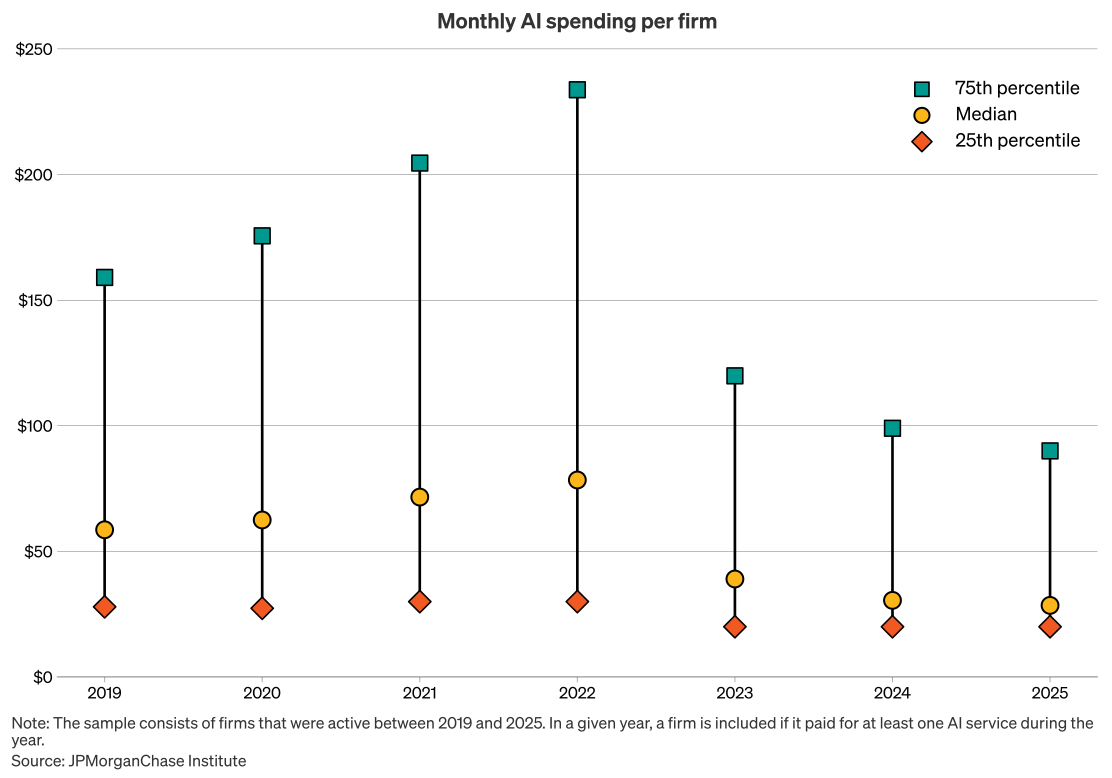
Figure 6 shows monthly AI spending per firm across the entire small business market from 2019 to 2025, illustrating a pattern that appears to contrast with the within-adopter spending growth documented in Figure 5. Median spending peaked at approximately $80 per month in 2022 before declining to roughly $30 per month by 2025. Similarly, the 75th percentile fell from approximately $230 in 2022 to $90 in 2025, while the 25th percentile remained relatively stable between $20 and $30 per month throughout the period. This market-wide decline coincides with the surge in AI adoption documented in Finding 1, when the small business adopter base expanded from 5.2 percent in 2023 to 17.7 percent by the end of 2025.15 The timing suggests that the apparent spending decline may have reflected a market-level composition effect rather than reduced spending by established adopters: as newer, lower-spending adopters entered the market at entry points around $20 to $30 per month, they likely diluted aggregate statistics even as established adopters continued increasing their investments.
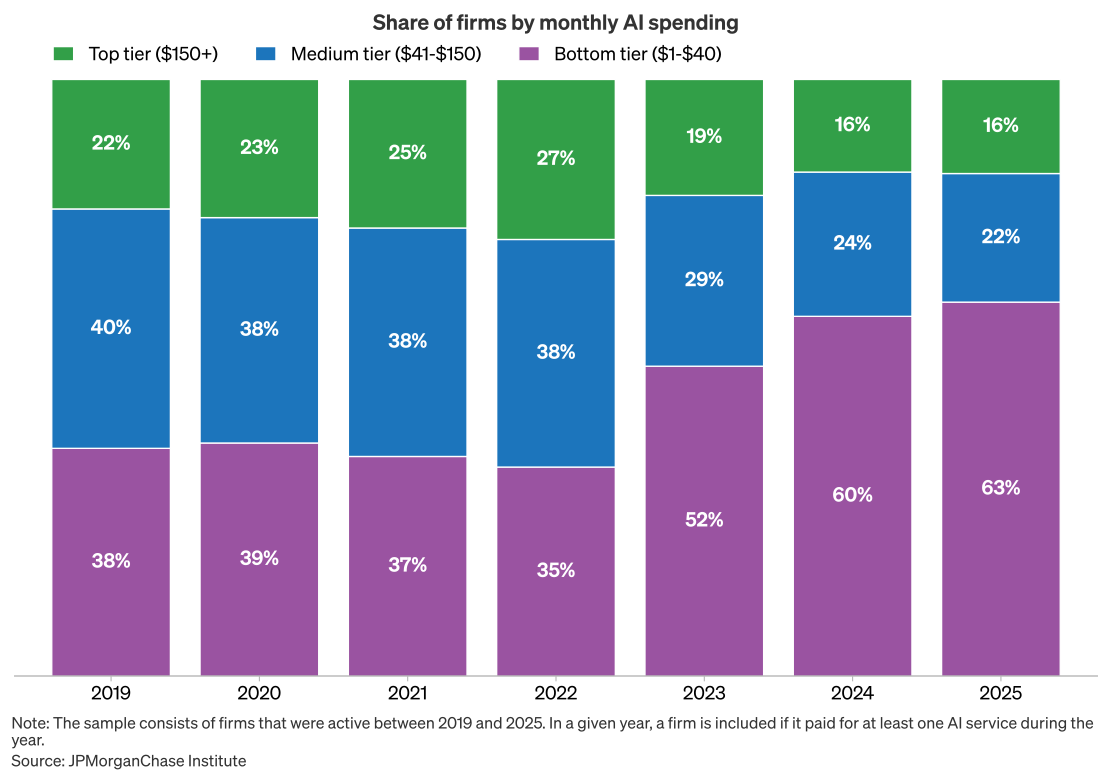
Figure 7 shows the distribution of small businesses across monthly AI spending tiers from 2019 to 2025, uncovering a systematic shift in market composition toward lower-spending users in line with the previous chart. In 2019, firms spending up to $40 per month (the bottom tier) represented approximately 38 percent of AI users, while those spending $41 to $150 (the medium tier) comprised roughly 40 percent, and high spenders above $150 (the top tier) accounted for 22 percent. By 2025, this distribution had shifted markedly: the bottom tier expanded to approximately 63 percent of users, the medium tier contracted to roughly 22 percent, and the top tier declined to 16 percent. This compositional change is consistent with the introduction of entry-level AI services, particularly generative AI platforms priced at $20 to $30 per month, which enabled substantial market expansion among budget-constrained businesses that previously faced prohibitive adoption barriers. The growing dominance of bottom-tier spenders provides direct evidence for the dilution effect observed in aggregate spending statistics in Figure 6: as the adopter base more than tripled from 2023 to 2025,16 new entrants concentrated in the lowest spending tier, pulling down aggregate statistics even as individual firms within each tier may have maintained or increased their commitments.
What these spending patterns ultimately reveal is that not all small business AI adopters are the same, and the differences between them run deeper than just timing. Small businesses that started adopting AI in 2019 and 2021 were likely to be a particular kind of firm: willing to pay a premium, comfortable with uncertainty, and organizationally prepared to absorb the costs of technology with few proven use cases at the time (Acemoglu et al. 2022; Bresnahan and Greenstein 1996). Their sustained spending growth suggests these were genuine commitments that deepened as firms found more ways to put AI to work (McElheran 2015). The small businesses that adopted AI after 2022 came in at a lower cost, drawn by affordable AI tools, and their flatter trajectories suggest a different type of engagement with the technology.17 They are still nascent in their use of AI services and may have room to deepen their usage and realize more of AI’s potential across their operations.
Employer firms adopted AI at nearly twice the rate of nonemployer firms, with knowledge-intensive industries such as information, professional services, and educational services leading the way.
So far, the evidence shows that both the pace and depth of AI adoption have increased, with spending patterns revealing more consistent engagement in AI services among small businesses and signaling that many are beginning to realize economic benefits. Understanding which types of small businesses adopt AI is critical for assessing how those economic benefits are distributed across the small business sector. We examined adoption patterns across employer status, revenue size, and industry to assess whether these factors shape AI adoption as they have for other technologies.
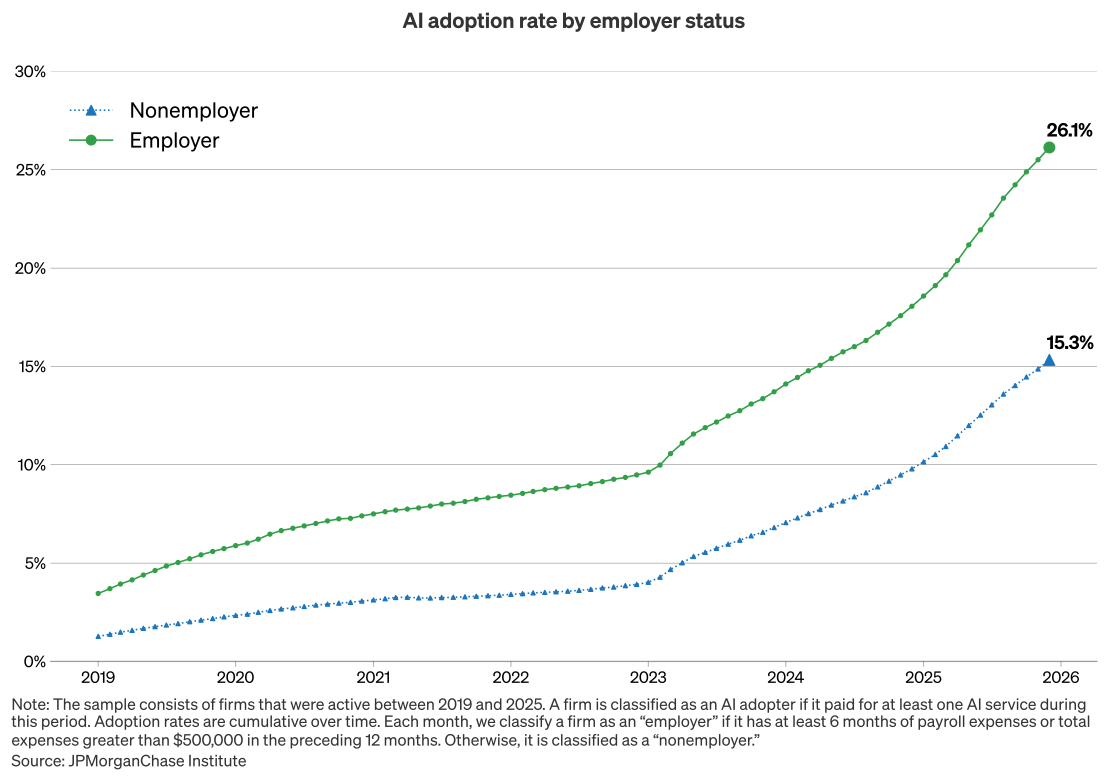
Figure 8 shows AI adoption rates by employer status over time. Employer firms consistently adopted AI at substantially higher rates than nonemployer firms. In January 2023, 9.6 percent of employer firms adopted AI, and only 4 percent of nonemployer firms adopted AI—a gap of 5.6 percentage points. This employer advantage persisted across all years in the data, with the gap increasing as overall adoption increased. In December 2025, this gap increased to 10.8 percentage points with 26.1 percent employer firms adopting AI compared to 15.3 percent among nonemployers. This persistent employer advantage may reflect differences in organizational structure and capacity rather than financial resources alone. Figure 9 explores this possibility by comparing adoption across employer and nonemployer firms within revenue categories, helping assess whether access to human capital and implementation capacity may play a more central role than firm size in explaining the gap.
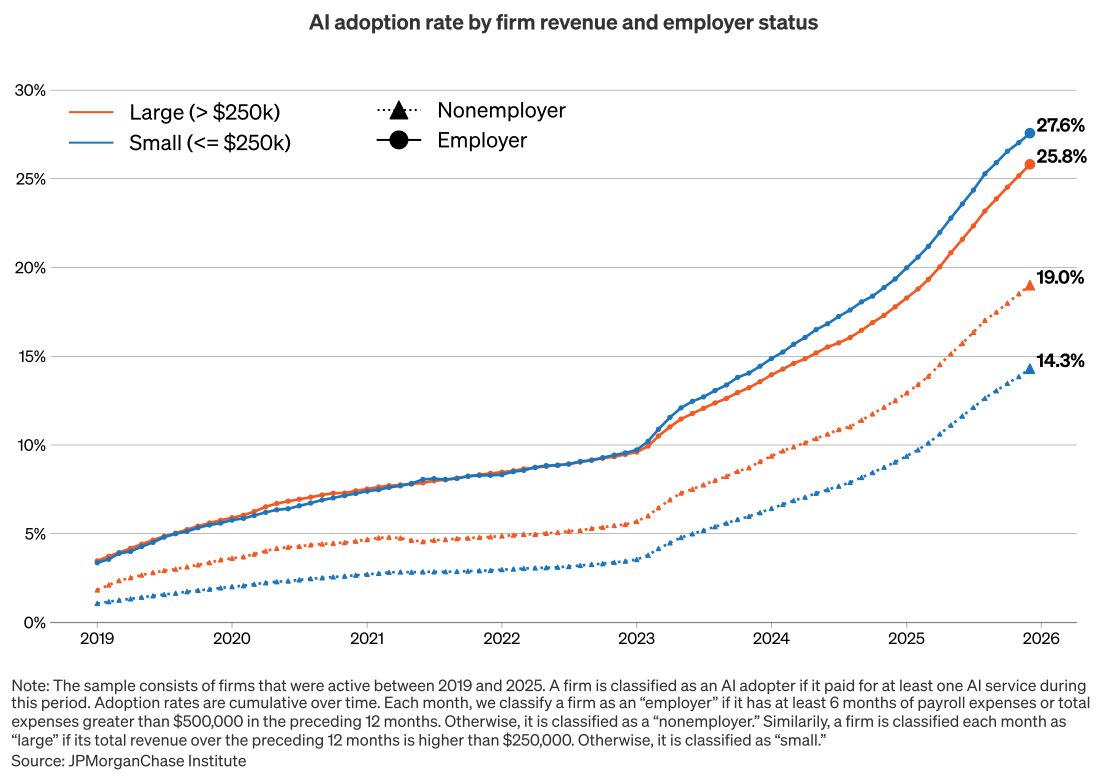
Figure 9 shows AI adoption rates by employer status and revenue size, revealing that size may not explain the employer advantage.18 Within each size category, employer firms adopted at substantially higher rates than nonemployers. By December 2025, among the lowest-revenue firms (less than $250,000), employers adopted at 27.6 percent compared to 14.3 percent for nonemployers, a gap comparable to the overall difference. Notably, small employer firms adopted at higher rates than large nonemployer firms—27.6 percent versus 19 percent—suggesting that having access to additional human capital to implement and integrate AI may be more important than financial resources alone. Sole proprietors may face the challenge of managing all business functions themselves, potentially lacking the bandwidth, specialized skills, or time required for AI implementation and learning, constraints that may persist regardless of revenue levels.19
Among employer firms, adoption rates increased more for small firms than for large firms, which contrasts with the general finding that adoption rates rise with revenue size. By 2025, the within-employer gap is 2.2 percentage points. However, this gap between small and large employers is far smaller than the employer-nonemployer gap. The persistence of the employer advantage across revenue categories may suggest that the adoption divide reflects organizational capacity and access to human capital for implementation rather than financial capacity to afford AI services.20
This result is consistent with patterns observed for other advanced technologies, where employer status has proven to be a strong predictor of adoption. For instance, the 2025 NFIB Small Business and Technology Survey, which includes both nonemployer and employer firms, finds that nonemployers report lower AI familiarity and adoption than employer firms across all size categories, with only 48 percent familiar with AI to some degree, compared to 55 percent of firms with 1–9 employees and 82 percent of firms with 50 or more employees (NFIB 2025).
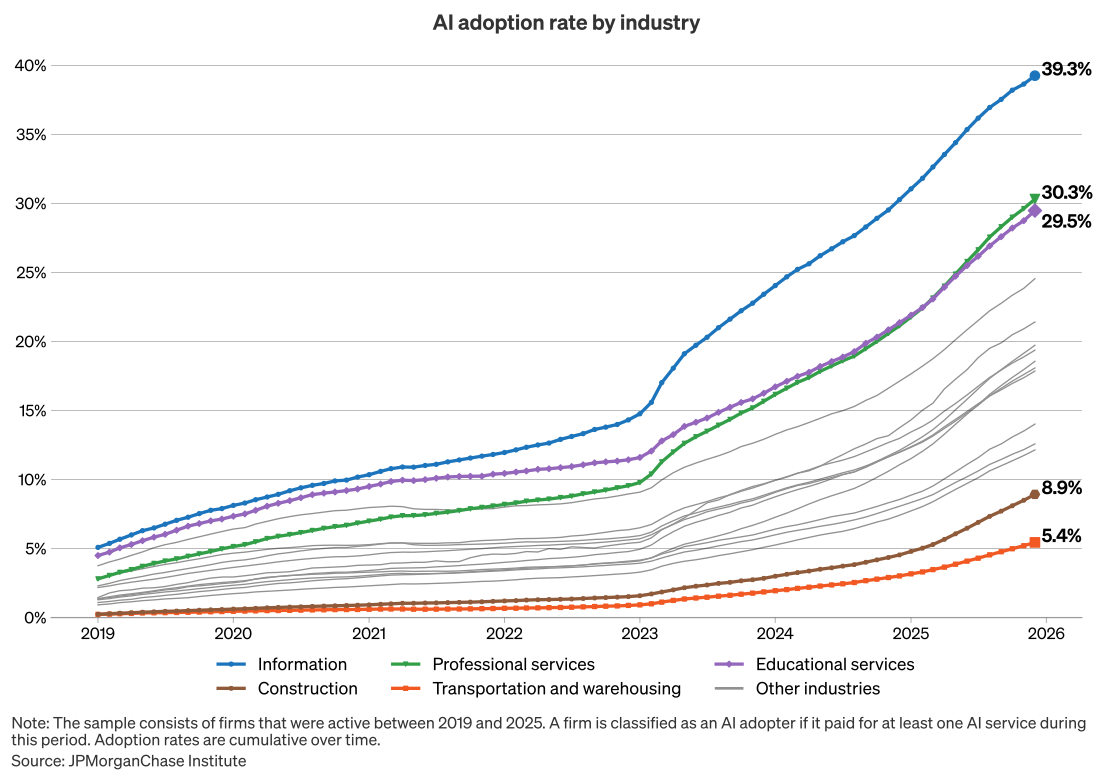
Figure 10 shows adoption rates across industries from 2019 through 2025, highlighting substantial variation in both adoption levels and growth trajectories. By 2025, knowledge-intensive industries led adoption: the information industry reached the highest adoption rate at 39.3 percent, followed by professional services at 30.3 percent and educational services at 29.5 percent.21 More capital-intensive industries lagged behind: construction showed adoption at 8.9 percent, while transportation and warehousing lagged at just 5.4 percent. 22 Figure 10 also reveals that adoption rates accelerated sharply after 2022 across all industries, coinciding with the introduction of widely accessible generative AI tools. These patterns are consistent across multiple independent data sources.23 The concentration in knowledge-intensive industries may reflect the fact that AI primarily impacts cognitive and knowledge-intensive activities, while tasks with strong physical components in construction, manufacturing, and personal services remain less affected (Filippucci, Gal, and Schief 2024). Advanced technology adoption more broadly exhibits similar patterns, with particularly high adoption in manufacturing, information, professional services, healthcare, retail, and wholesale (Acemoglu et al. 2022).
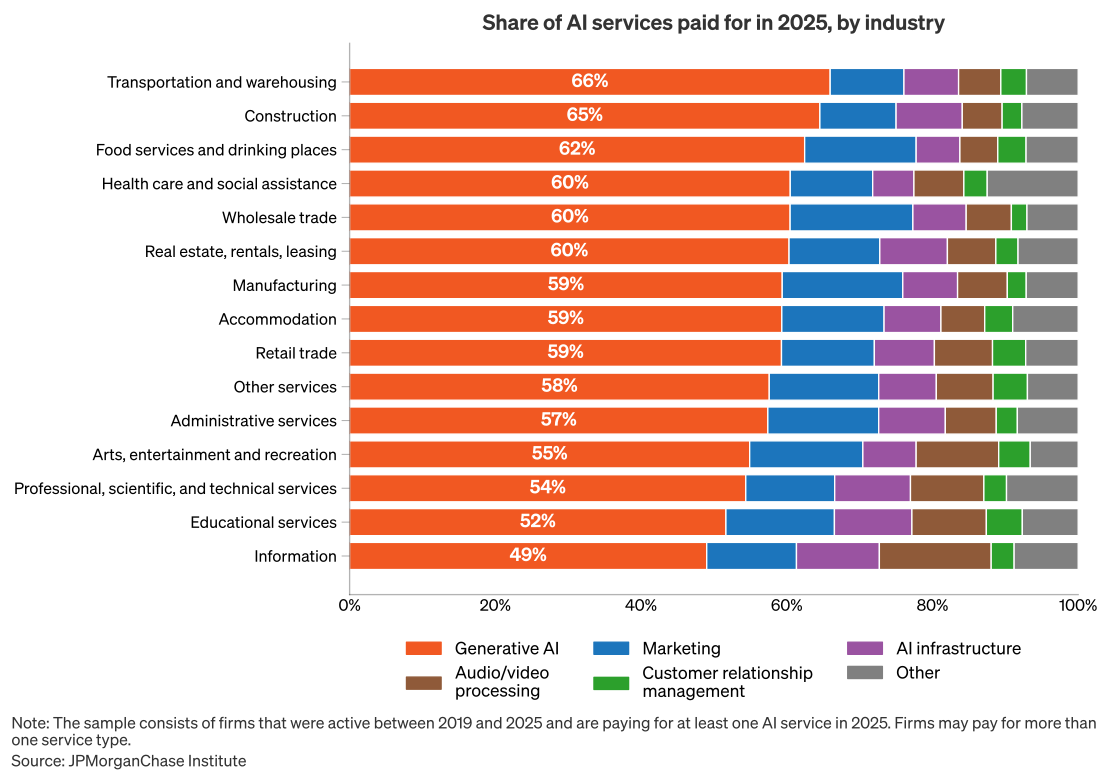
Figure 11 shows the 2025 payment distribution across AI service categories by industry, highlighting that generative AI represents the largest share of payments in every industry examined. However, industries differ in how they complement generative AI with more specialized services. Professional services, information, and educational services show greater diversity, utilizing marketing AI, audio and video processing, AI infrastructure, and customer relationship management tools alongside generative AI. Transportation and warehousing and construction, by contrast, relied predominantly on generative AI with limited specialized adoption. Wholesale trade, food service, and manufacturing fell somewhere in between, combining generative AI with marketing AI but making limited use of other service categories. This pattern suggests that while generative AI has become a near-universal entry point, the depth and breadth of AI integration vary considerably across industries in ways that likely reflect differences in operational needs, technical capacity, and business models.
Prior research on technology adoption may help explain these results. Generative AI's accessibility, delivered through cloud-based platforms with natural language interfaces at low cost and requiring no technical expertise, makes it well suited to address common business needs (OECD 2024). Deploying more specialized AI services, however, requires complementary organizational investments, human capital, and technical infrastructure that vary considerably across firms and industries, which may explain why adoption of these tools remains uneven (Brynjolfsson, Li, and Raymond 2025; Chatterji, Rock, and Talamas 2025). Industries with more complex information-processing needs and greater existing digital infrastructure, such as professional services and information sectors, appear better positioned to integrate a broader range of AI capabilities, while industries with simpler or more standardized workflows may find that generative AI alone meets most of their needs.
Lower barriers to adoption have facilitated the rapid acceleration of AI use among small businesses. Entry costs declined from $50 per month in 2019 to $20–30 per month in 2025, enabling widespread adoption, especially by newer cohorts of small businesses. The shift from sporadic to consistent payments, combined with growing service diversification, suggests that many small businesses are finding genuine operational value in AI tools. However, this democratization has not reached all businesses. Substantial gaps persist across employer status, industry sectors, and firm characteristics, indicating that lower costs alone may not ensure that a wide range of businesses benefit from AI advances.
As policymakers consider how to support small business competitiveness in an increasingly AI-enabled economy, the challenge is not to replicate what has already happened in markets—making AI tools affordable and accessible—but rather to address the adoption barriers that persist despite these improvements. As such we offer the following four key implications:
To study the use of AI among small businesses, we created a sample of de-identified small businesses that have Chase Business Banking deposit accounts and were active between January 2019 and December 2025. Since we are interested in the evolving landscape of AI engagement among small businesses, we allow firms to enter or exit the sample during any point of the sample period. For a firm to be considered active in a month, it must have at least 10 transactions and $500 in outflows for a minimum of three months in the preceding 12 months of the firm’s history. Additionally, we only include firms that have at most three business deposit accounts and are associated with no more than three locations in every month.
Firms must also be operating in one of the fifteen industries characteristic of the small business sector: professional services (e.g. lawyers, accountants, consultants, marketing, media, and design); educational services; construction; real estate, rental and leasing; retail trade; health care and social services; transportation and warehousing; administrative services; food services and drinking places (e.g., restaurants); wholesale trade; manufacturing; arts, entertainment, and recreation; information (e.g., independent film production companies, local radio stations, local data backup data services, and independent research data firms); accommodation, and other services. Industries were identified using the 2-digit NAICS code, with the exception of restaurants and accommodation, which were identified using the 3-digit NAICS code. With these restrictions, our sample included over 4.6 million small businesses from 2019 to 2025.
To identify payments to AI services, we compiled a list of providers whose products or services rely on artificial intelligence as a core functional component, or who have made substantial, identifiable investments in AI technologies. While we note that the definition of “AI” is inherently dynamic and has evolved over time, our classification verifies that a provider meets these criteria since the start of the sample period or when the provider started operations, whichever comes later. Transactions with these providers were classified as AI payments, with the assumption that these payments reflect access or use of AI capabilities.
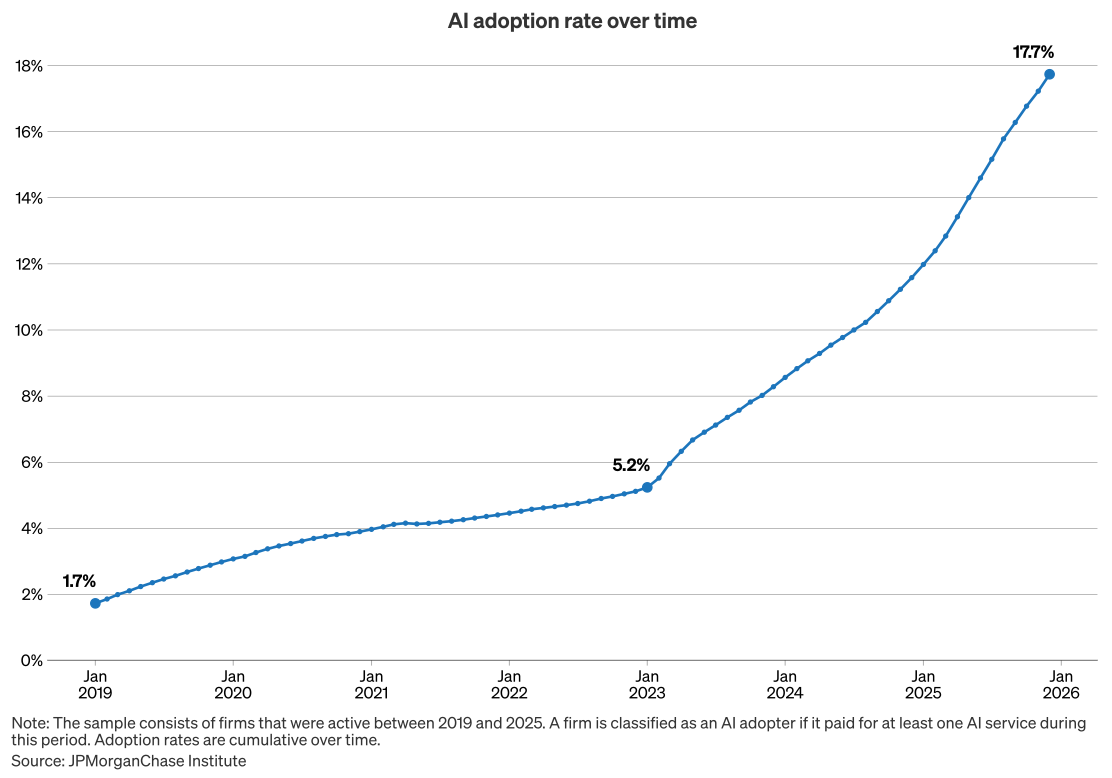
Figure A1 illustrates the AI adoption rate for small businesses over time. Adoption increases gradually from 2019 through 2022, followed by a marked acceleration beginning in 2023. By the end of 2025, approximately 17.7 percent of firms had adopted AI. This estimate is comparable to the Census Bureau’s Business Trends and Outlook Survey (2025), which reports an adoption rate of 17.8 percent for the same period.
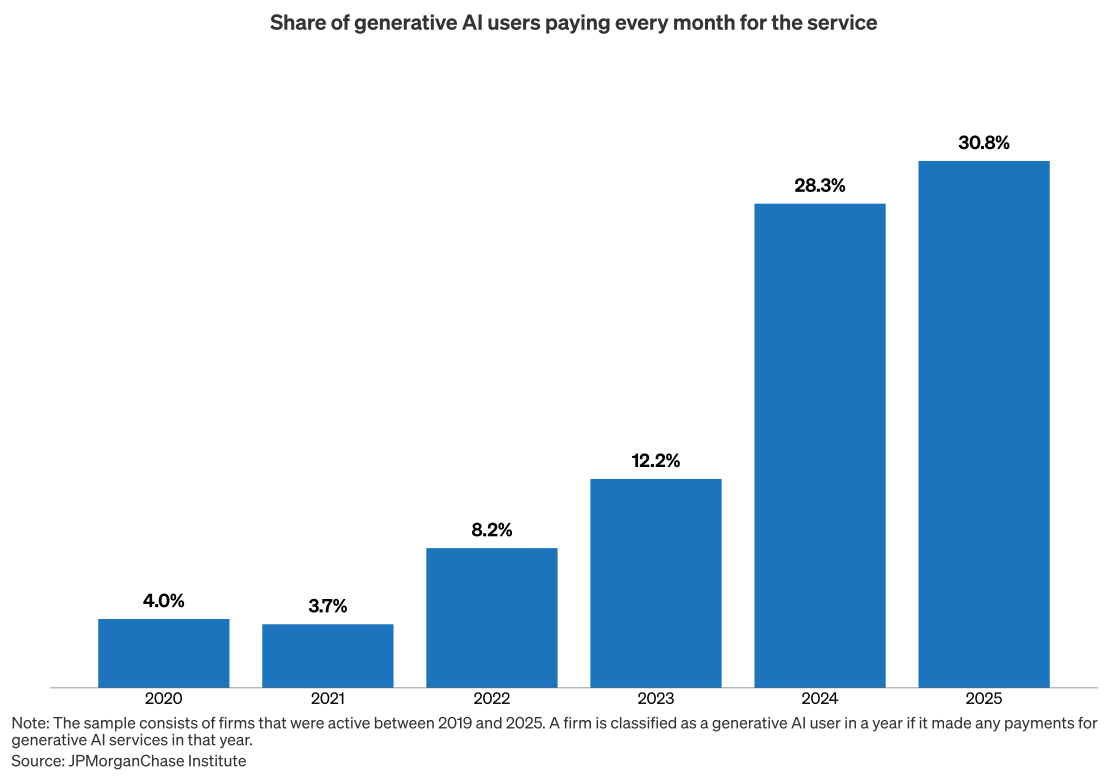
Figure A2 illustrates the share of generative AI users who pay for the service every month, where a firm is classified as a monthly user if it makes at least 12 payments to generative AI services in the given year. The share rises gradually through 2023, followed by a sharp increase beginning in 2024. This acceleration coincides with the wider availability of subscription-based generative AI tools while indicating a growing shift from occasional or experimental use toward more recurring, sustained engagement.
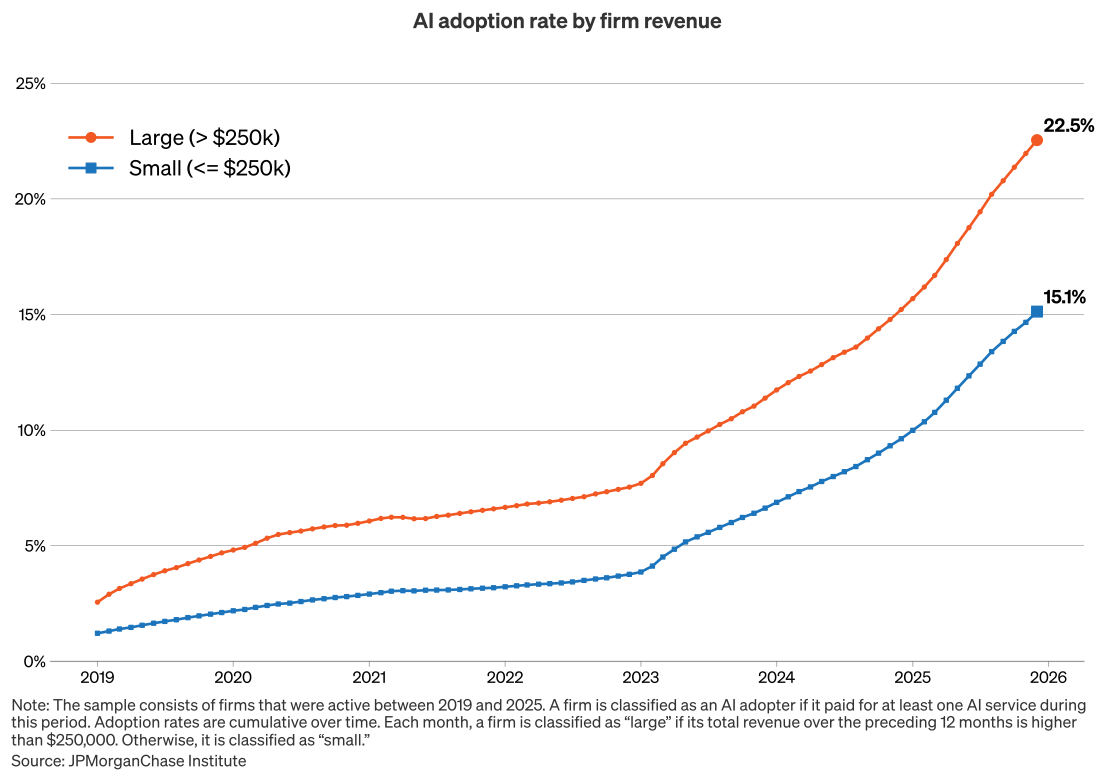
Figure A3 illustrates differences in AI adoption by firm revenue. Adoption rates are consistently higher among larger firms (annual revenue above $250,000) than among smaller firms (annual revenue equal to or below $250,000) throughout the sample period. While adoption increases for both groups over time, the gap widens beginning in 2023, as larger firms experience a more rapid acceleration in AI uptake.
Acemoglu, Daron, David Autor, Jonathon Hazell, and Pascual Restrepo. 2022. “Artificial intelligence and jobs: Evidence from online vacancies.” Journal of Labor Economics Vol. 40, No. S1: S293–S340.
Acemoglu, Daron, Gary Anderson, David Beede, Catherine Buffington, Eric Childress, Emin Dinlersoz, Lucia Foster, Nathan Goldschlag, John Haltiwanger, Zachary Kroff, Pascual Restrepo, and Nikolas Zolas. 2023. “Advanced technology adoption: selection or causal effects?” AEA Papers and Proceedings Vol. 113: 210–214.
Anthropic. 2025. Anthropic Economic Index Report: Uneven Geographic and Enterprise AI Adoption.
https://www.anthropic.com/research/anthropic-economic-index-september-2025-report.
Bick, Alexander, Adam Blandin, and David J. Deming. 2026. “The rapid adoption of generative AI.” Management Science.
Bonney, Kathryn, Cory Breaux, Cathy Buffington, Emin Dinlersoz, Lucia S. Foster, Nathan Goldschlag, John C. Haltiwanger, Zachary Kroff, and Keith Savage. 2024. “Tracking firm use of AI in real time: A snapshot from the Business Trends and Outlook Survey.” National Bureau of Economic Research No. w32319.
Bowen, Tom. 2025. “Main Street Meets Machine Learning: Inside the AI Productivity Boom at Small Businesses.” Gusto Insights.
https://gusto.com/resources/gusto-insights/smbs-using-ai-2025.
Bresnahan, Timothy, and Shane Greenstein. 1996. “Technical progress and co-invention in computing and in the uses of computers.” Brookings Papers on Economic Activity. Microeconomics. 1–83.
Brynjolfsson, Erik, and Lorin M. Hitt. 2000. “Beyond Computation: Information Technology, Organizational Transformation and Business Performance.” Journal of Economic Perspectives Vol. 14, No. 4: 23–48.
Brynjolfsson, Erik, Daniel Rock, and Chad Syverson. 2021. “The productivity J-curve: How intangibles complement general purpose technologies.” American Economic Journal: Macroeconomics Vol. 13, No. 1: 333–372.
Brynjolfsson, Erik, Danielle Li, and Lindsey Raymond. 2025. “Generative AI at work.” The Quarterly Journal of Economics Vol. 140, No. 2: 889–942.
Chatterji, Aaron, Daniel Rock, and Eduard Talamas. 2025. “Transformative AI and Firms.” The Economics of Transformative AI.
Dinlersoz, Emin, Can Dogan, and Nikolas Zolas. 2024. “Starting Up AI.” Center for Economic Studies Working Paper CES-24-09.
EU Artificial Intelligence Act. 2025. Chapter 1, Article 3: Definitions.
https://artificialintelligenceact.eu/article/3/.
Filippucci, Francesco, Peter Gal, and Matthias Schief. 2024. “Miracle or Myth? Assessing the macroeconomic productivity gains from Artificial Intelligence.” OECD Artificial Intelligence Papers, No. 29, OECD Publishing, Paris.
McElheran, Kristina. 2015. “Do market leaders lead in business process innovation? The case (s) of e-business adoption.” Management Science Vol. 61, No. 6: 1197–1216.
McElheran, Kristina, J. Frank Li, Erik Brynjolfsson, Zachary Kroff, Emin Dinlersoz, Lucia Foster, and Nikolas Zolas. 2024. “AI Adoption in America: Who, What, and Where.” Journal of Economics & Management Strategy Vol. 33, No. 2: 375–415.
McKinsey & Company. 2025. The State of AI: Global Survey 2025.
https://www.mckinsey.com/capabilities/quantumblack/our-insights/the-state-of-ai.
Microsoft. 2018. The Future Computed: Artificial Intelligence and its Role in Society.
https://news.microsoft.com/cloudforgood/_media/downloads/the-future-computed-english.pdf.
Muro, Mark, and Shriya Methkupally. 2025. “Mapping the AI economy: Which regions are ready for the next technological leap?” Brookings Institution.
National Federation of Independent Business. 2025. Small Business and Technology Survey.
https://www.nfib.com/wp-content/uploads/2025/06/2025-NFIB-Technology-Survey.pdf.
OECD. 2024. SME Digitalisation to manage shocks and transitions: 2024 OECD D4SME Survey.
https://www.oecd.org/content/dam/oecd/en/publications/reports/2024/09/sme-digitalisation-to-manage-shocks-and-transitions_735fc44d/eb4ec9ac-en.pdf.
OECD. 2025. SME Digitalisation for competitiveness: The 2025 OECD D4SME Survey
https://www.oecd.org/content/dam/oecd/en/publications/reports/2025/04/sme-digitalisation-for-competitiveness_3116862a/197e3077-en.pdf.
Kemp, Andy. 2025. “AI Use at Work Rises.” Gallup. https://www.gallup.com/workplace/699689/ai-use-at-work-rises.aspx.
Schwaeke, Julia, Anna Peters, Dominik K. Kanbach, Sascha Kraus, and Paul Jones. “The new normal: The status quo of AI adoption in SMEs.” Journal of Small Business Management Vol 63, No. 3: 1297–1331.
Thryv. 2025. AI and Small Business Adoption 2025.
https://assets.thryv.com/prod/media/pdfs/guides/AI-and-Small-Business-Adoption-2025-FINAL.pdf.
U.S. Chamber of Commerce. 2025. Empowering Small Business: The Impact of Technology on U.S. Small Business, Fourth Edition.
https://www.uschamber.com/assets/documents/Empowering-Small-Business-Report-2025.pdf.
U.S. Census Bureau. 2025. Business Trends and Outlook Survey (BTOS) Data Release. https://www.census.gov/data/experimental-data-products/business-trends-and-outlook-survey.html.
We are thankful to the many people who made essential contributions to this research. We owe particular thanks to Sarwari Das for exceptional research assistance, and we are also grateful to Michael Vaden for his valuable research support.
We are indebted to our internal partners and colleagues, who support delivery of our agenda in a myriad of ways and acknowledge their contributions to each and all releases.
This material is a product of JPMorganChase Institute and is provided to you solely for general information purposes. Unless otherwise specifically stated, any views or opinions expressed herein are solely those of the authors listed and may differ from the views and opinions expressed by J.P. Morgan Securities LLC (JPMS) Research Department or other departments or divisions of JPMorgan Chase & Co. or its affiliates. This material is not a product of the Research Department of JPMS. Information has been obtained from sources believed to be reliable, but JPMorgan Chase & Co. or its affiliates and/or subsidiaries (collectively J.P. Morgan) do not warrant its completeness or accuracy. Opinions and estimates constitute our judgment as of the date of this material and are subject to change without notice. No representation or warranty should be made with regard to any computations, graphs, tables, diagrams or commentary in this material, which is provided for illustration/reference purposes only. The data relied on for this report are based on past transactions and may not be indicative of future results. J.P. Morgan assumes no duty to update any information in this material in the event that such information changes. The opinion herein should not be construed as an individual recommendation for any particular client and is not intended as advice or recommendations of particular securities, financial instruments, or strategies for a particular client. This material does not constitute a solicitation or offer in any jurisdiction where such a solicitation is unlawful.
Wheat, Christopher, Chi Mac, and Andrea Passalacqua. 2026. "Understanding the use of AI among small businesses." JPMorgan Chase Institute.
Footnotes
The definition of AI is continually evolving alongside technological advancements. In 2019, AI was generally considered “a set of technologies that enable computers to perceive, learn, reason, and assist in decision-making to solve problems in ways that are similar to what people do” (Microsoft 2018), with a primary focus on automating specific tasks using machine learning and deep learning. More recently, the definition has evolved. For example, the European Commission now defines AI as “a machine-based system that is designed to operate with varying levels of autonomy and that may exhibit adaptiveness after deployment, and that, for explicit or implicit objectives, infers, from the input it receives, how to generate outputs such as predictions, content, recommendations, or decisions that can influence physical or virtual environments” (EU Artificial Intelligence Act 2025). Given this dynamic nature, we classified providers as AI providers if their products or services met the prevailing standard at the time. To ensure consistency, we apply the relevant criteria starting from the latest of the following: (i) the start of the sample period, (ii) the provider’s beginning of operations, or (iii) the date of the first identified transaction.
Figure A1 in the appendix shows the adoption rate among small businesses over time. The adoption rate increased gradually from 1.7 percent in 2019 to 4.5 percent in 2022. At the beginning of 2023, the adoption rate accelerated dramatically, reaching 8.3 percent by the end of the year and continuing to rise in 2024, reaching 11.6 percent. By December 2025, the adoption rate had reached 17.7 percent. This trend is in line with the Census Bureau’s Business Trends and Outlook Survey, which estimated that adoption rates would reach similar levels by the end of 2025 (BTOS 2025).
A cohort refers to a group of firms that that share a similar feature. In our case, we refer to firms that began their business activities in the same year.
Electricity took over 30 years to reach farm households after urban electrification, achieving only 20 percent household adoption even at that point (Filippucci, Gal, and Schief 2024; Anthropic 2025). At work, PC adoption reached 20 percent three years after the historical 1981 IBM PC launch and grew to 70 percent over 22 years, while internet adoption climbed from 20 percent in year two to 60 percent by year seven (Bick, Blandin and Deming 2026). Even among relatively recent technologies, adoption remained gradual: industrial robots, introduced decades ago, had reached only 2 percent of U.S. firms by 2018 (Acemoglu et al. 2023). In contrast, the percentage of U.S employees who indicate using AI at work has reached 45 percent in 2025, just three years after generative AI services became widely available, an adoption rate substantially faster than historical precedents (Gallup 2025).
Dinlersoz, Dogan, and Zolas (2024) document a substantial jump in AI business applications in 2024, attributing this to generative AI advances that broadened the applications of AI in business.
For instance, a recent survey highlighted that 28 percent of small businesses learned about new technologies from vendors and 13 percent from other owners (NFIB 2025).
A 2025 survey showed that more than 80 percent of small businesses using AI report productivity gains, with 16 percent reporting gains exceeding 20 percent, providing concrete evidence of AI’s proven value proposition (Gusto 2025).
A firm is considered a consistent user in a specific year if one of the following two conditions applied: (i) 50 percent or more of the observed months included at least one transaction toward an AI service, or (ii) the annual spending amount for AI services exceeded the 90th percentile of annual AI spending for that year. A firm was classified as a sporadic user if neither condition (i) nor (ii) applied.
We will discuss this point in greater detail in Finding 3.
McElheran (2015) indicates that the adoption of general-purpose digital technologies constitutes a form of process innovation that requires substantial organizational and operational adaptation, including changes to workflows, coordination across suppliers and customers, and complementary managerial practices. Firms that successfully make this transition tend to integrate these technologies into routine operations rather than use them sporadically, suggesting that sustained and regular use reflects deeper operational integration rather than one-off experimentation.
Survey evidence among businesses further indicates that organizations using AI in multiple business functions report significantly higher value capture, with McKinsey (2025) showing that more than two-thirds of respondents now use AI across multiple functions, a pattern consistent with the maturation from isolated pilots to integrated operational systems.
Research on technology diffusion has long emphasized that the transition from pilot testing to operational deployment requires costly process innovation and complementarities with organizational capabilities (Bresnahan and Greenstein 1996; McElheran 2015; Brynjolfsson and Hitt 2000). Early evidence from the 2017-2018 Annual Business Survey showed that only 5.8 percent of U.S. firms were using AI-related technologies in production, with adoption concentrated among large enterprises (McElheran et al. 2024). Recent survey evidence suggests that while reported AI adoption among small businesses has increased substantially, from 39 percent in 2024 to 55 percent in 2025, the majority of adopters remain in exploratory stages, with over half described as “still testing and exploring the tech” rather than fully integrating it into operations (Thryv 2025). Survey-based measures of adoption, however, may overstate operational depth, as self-reported usage may include everything from occasional experimentation to consistent daily integration. Moreover, successful integration requires not just initial adoption but sustained, regular use across multiple applications.
Brynjolfsson, Rock, and Syverson (2021) shows that successful technology adoption requires complementary organizational practices and workplace capabilities that enable technology to become integrated into core business processes, moving beyond isolated applications. The OECD (2025) survey of SMEs across seven countries finds that more digitally mature businesses (51 percent) are significantly more likely to integrate AI into their operations compared to the overall sample (39 percent), and documents how AI becomes embedded in business operations through both active adoption of AI services and passive integration via AI-enabled platform tools that support ongoing business functions.
Critically, this entry-cost decline did not necessarily represent price reductions on existing services but rather the introduction of fundamentally new, lower-priced products that expanded the market available services (OECD 2024).
This is in line with both the Census BTOS Survey, which estimated that AI adoption grew from 3.7 percent in 2023 to 17.8 percent by the end of 2025, and a survey by the U.S Chamber of Commerce which suggests that 58 percent of small businesses now use generative AI, up from just 23 percent in 2023, indicating rapid growth in the associated user base.
Figure A1 shows the adoption rate over time, highlighting a substantial increase from 5.2 percent in 2023 to 17.7 percent in 2025.
Research on technology diffusion suggests this kind of stratification between early committed adopters and later is a normal feature of how transformative technologies spread through the economy rather than an anomaly (Brynjolfsson, Rock, and Syverson 2021).
Adoption rates do rise with revenue size when examined across small businesses. Figure A2 in the appendix shows adoption rates for small versus large firms over time, where size is defined by annual revenue above or below $250,000. The chart shows that large firms consistently adopt AI at higher rates than small firms throughout the 2019-2025 period, with large firms adopting at 22.5 percent compared to 15.1 percent among small firms by December 2025. This positive relationship between firm size and technology adoption has been documented across various advanced technologies, including robotics, specialized software, and cloud computing, reflecting the role of fixed integration costs in adoption decisions (Acemoglu et al. 2022).
Evidence from the literature on digital technology adoption indicates that self-entrepreneurs address their technology skills needs primarily by relying on personal networks of family and friends (31 percent), while small and medium-sized businesses can reassign existing staff (46 percent and 44 percent respectively), highlighting the capacity constraints faced by nonemployer firms (OECD 2024).
This interpretation is consistent with the decline in AI service costs starting in 2023, when affordable entry-level AI tools became widely available even as the employer-nonemployer adoption gap widened.
Firms in the information industry include software developers, data hosting services, so on. Firms in the professional services include legal services, accounting, architecture, consulting, so on. Educational services include tutoring services, training facilities, so on. Construction firms include general or specialty trade contractors, while Transportation and warehousing firms may include storage facilities, freight companies, so on.
The literature also highlights how geographical patterns emerge in AI adoption. For instance, Muro et al. (2025) document AI's extreme concentration in 30 "star" metros (e.g., San Francisco, New York) hosting digital talent ecosystems, while 43 other areas - often with traditional industry bases - risk "development traps" due to barriers in innovation and adoption.
The Census Bureau's Business Trends and Outlook Survey documents AI use ranging from 1.4 percent in construction and agriculture to 18.1 percent in the information sector (Bonney et al. 2024), while the Brookings Institution reports information sector adoption at 20.1 percent, professional, scientific, and technical services at 18.2 percent, compared to construction at 3.1 percent and accommodation and food services at 2.9 percent (Muro et al. 2025). Earlier Annual Business Survey data similarly found manufacturing and information sectors leading at roughly 12 percent adoption, with professional services and healthcare following, while construction and retail lagged at approximately 4 percent each (McElheran et al. 2024).
Authors

Chris Wheat
President, JPMorganChase Institute

Chi Mac
Business Research Director

Andrea Passalacqua
Small Business and LED Research Lead
Media Contact
Shelby Wagenseller,
shelby.wagenseller@jpmchase.com