Introduction
The intensifying strategic competition between the United States and China is reshaping the business and investment environment for countries globally. As both countries recalibrate their policies, firms are finding it more difficult to operate seamless global strategies and integrated operating models. Commerce is being disrupted across multiple markets even as new pockets of commercial opportunity emerge.
U.S.-China competition is far from the only geopolitical challenge facing third countries and multinational companies – but it is uniquely persistent and far-reaching, cutting across markets like few others. Indeed, many of the forces that will drive the evolution of global economy still run through the two countries: from their respective growth outlooks to their influence over the development of artificial intelligence, energy and climate systems, and key technologies that underpin modern industrial capacity.
The events of a single week in October 2025 illustrate the scale of these spillovers. As the U.S. and China exchanged threats over new tariffs and rare earth export controls, the most immediate effects were playing out elsewhere. The Netherlands seized control of semiconductor firm Nexperia, amid broader U.S. efforts to slow China’s progress, in response to concerns that the company’s assets would be stripped by its Chinese owner. American board members resigned from several European shipping firms after Chinese retaliation to new U.S. shipping fees. Chinese authorities also sanctioned the U.S. subsidiaries of a major Korean shipbuilder for allegedly assisting Washington probe Chinese rivals, triggering new port fees.
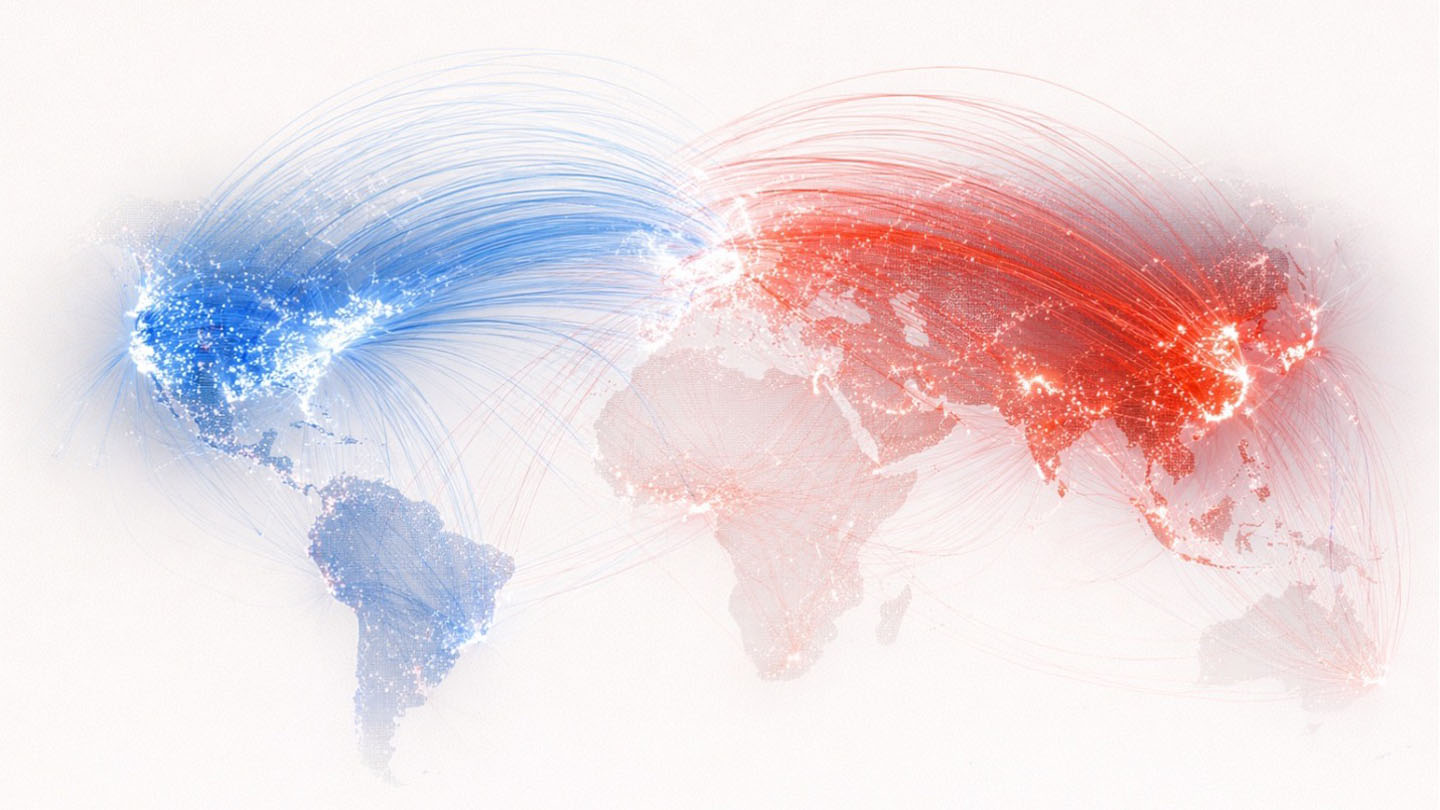
These impacts are not isolated country-specific episodes but manifestations of broader structural forces set in motion as the U.S. and China compete. This competition is fragmenting the global marketplace, with market access increasingly conditional on geopolitical alignment. Countries are being exposed to greater, more frequent geopolitical shocks and, in some cases, responding with increased defense spending. Others risk the headwinds of flight to safety if conditions reduce appetite for risk.
For businesses, this environment presents a growing set of trade-offs. Many companies are weighing whether they need to duplicate supply chains to serve increasingly segmented markets or accelerate investments in their own resilience. Decisions previously considered purely commercial – such as payments infrastructure or currency of denomination – are now being evaluated through a geopolitical lens. Firms are both subject to, and increasingly expected to help enforce, a widening array of extraterritorial economic-security measures, from sanctions to export controls.
These impacts are being felt across markets as well. Restrictions on market access and a focus on supply chain resiliency are being felt in corporate margins, impacting the share price outlook. In addition, restrictions on public listings and capital flows are reshaping how global investors access international investment opportunities.
U.S.-China spillovers are also no longer confined to technology or other traditionally sensitive sectors. Panama has faced heightened scrutiny over Hong Kong-based CK Hutchison’s ownership of key ports along the canal with Panama's Supreme Court recently invalidating the Hong Kong-based operator's concessions. Brazilian soybean farmers have benefited as China shifts purchases away from the United States. Across industries, companies are confronting a more complex, politically conditioned environment for global operations.