Blog

JPMorganChase's 2026 West Coast Tech Week and the 18th Annual Technology Innovation Symposium

By the Global Technology Strategy, Innovation and Partnerships Team

November 16, 2026

Each fall, JPMorganChase’s Global Technology Leadership team travels to the Bay Area to connect with the technology ecosystem and innovators shaping the future of technology. Throughout Tech Week, our technology leaders met with 30+ strategic partners and emerging tech companies across San Francisco and Silicon Valley to explore their capabilities, product roadmaps and industry trends.

Many major technology advances begin with founders and the investors who back them. Tech Week gives our leaders an opportunity to gain early insights, test assumptions and inform our technology strategy, while giving founders a firsthand view of how a global firm adopts technology at scale.

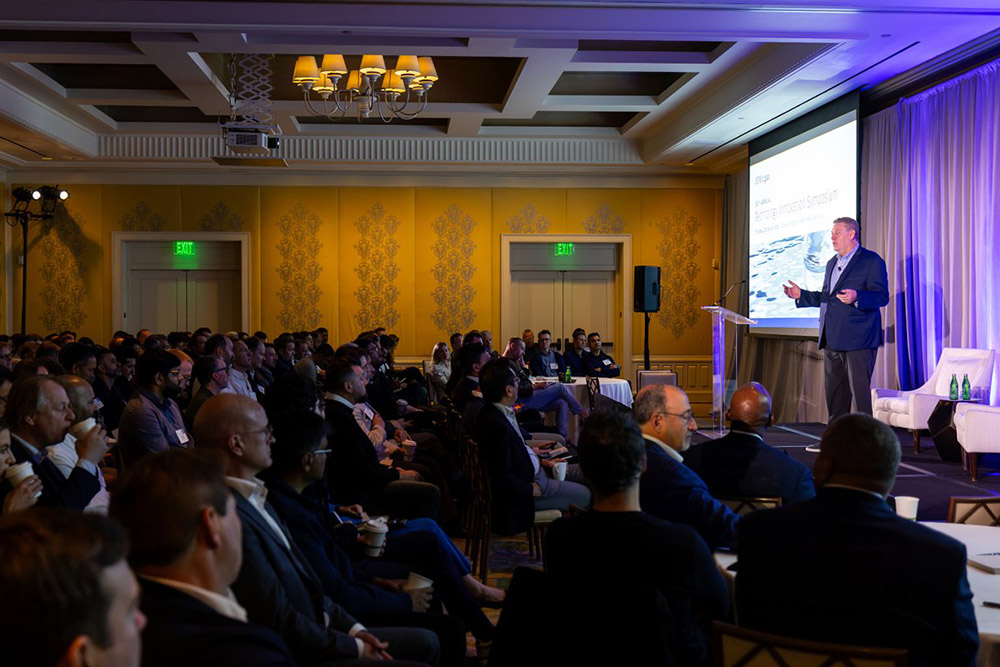
“One of the most valuable things about West Coast Tech Week is the opportunity to hear directly from the companies shaping the next wave of technology and pressure-test our own thinking,” said Larry Feinsmith, Head of Global Technology Strategy, Innovation & Partnerships. “What stood out this year is that the conversation has moved beyond what AI can do to how we redesign technology and work around increasingly capable long running agents. That makes judgment, strong engineering foundations and the right controls more important, not less. Our job is to take the best of what we learned and turn it into meaningful action for JPMorganChase.”


Larry talk

Key themes we explored:

  • Dynamics in the evolving model ecosystem: While frontier models continue to advance, a growing ecosystem of startups is building tools to adapt smaller, open-weight models to specific tasks. These models are generally less capable than frontier models, but post-training / reinforcement learning can bring them close to frontier performance on defined tasks at lower inference cost. The key differentiator will be an organization's ability to evaluate, govern, observe, and continuously improve AI systems, while maintaining model choice.
  • Getting the right intelligence and context to each task: As agents take on more complex work, providers are looking beyond the capabilities of any single model to improve how reliably and economically a task gets done. AI-ready data is evolving to give agents a better understanding of a company's information and how it relates to the work at hand. At the same time, specialized decision models can help agents check their work and choose what to do next, while routing, caching and other techniques reduce cost. Together, these developments point toward AI systems that use the right information and capabilities for each task, measured by the quality and total cost of the completed work.
  • Software factories are emerging as the operating model for engineering: Software engineering is evolving from deploying individual coding agents toward a governed software-factory architecture that increases end-to-end engineering throughput. The priority is to establish reusable foundations across agent-ready environments, source control and context, testing, security, observability, model routing and pathways to production, while preserving human approval and control of agent traces and enterprise knowledge.
  • Agentic AI is becoming the next enterprise computing platform: AI is moving beyond individual assistants toward autonomous agents that can continue work in the background and collaborate with employees and teams across workflows. The discussion is no longer whether agents will become mainstream, but how enterprises govern them safely and effectively for different employee groups. Multiple companies also described an environment where agents participate in meetings, capture institutional knowledge, initiate actions, and persist across workflows.
  • Cybersecurity in the Agentic Era: As agentic AI surfaces expand and become more autonomous, the industry is converging on a layered approach to securing how they operate. Agents increasingly need isolated runtimes, distinct identities, tightly scoped permissions, and controls that can observe and govern behavior wherever they run. At the same time, cyber defense is becoming more agentic itself, with offensive and defensive AI agents continuously testing environments, identifying exposures and improving defenses. Together, these approaches point toward security designed for machine-speed activity, with bounded authority, strong runtime controls and continuous evaluation.
  • Compute Remains a Gating Factor: Companies large and small remain focused on securing enough compute to develop and serve their new AI technology, making access to compute an increasing differentiator. The market for custom silicon continues to grow, and important open-source software developments are making it easier to move workloads across different types of GPUs and other chips.

Later in the week, the 18th Annual J.P. Morgan Technology Innovation Symposium was hosted in partnership with Technology Investment Banking, which brought together approximately 200 CEOs, founders, and VCs from the emerging technology community, creating a valuable forum to deepen relationships, exchange perspectives on the technology landscape, and connect our technology strategy with the attending companies and investors shaping the next wave of innovation.

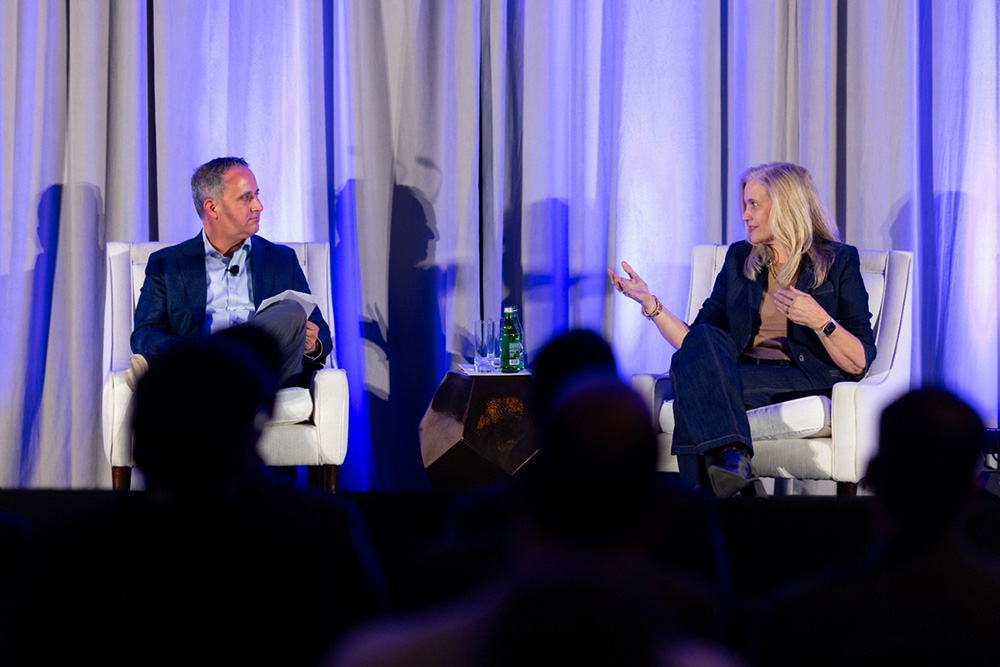
In this year's fireside chat, Lori Beer, Global Chief Information Officer, noted, “the greatest opportunity now is not choosing the winning model, but building the governance, software factory, evaluation, and security capabilities that allow us to safely scale agents.”

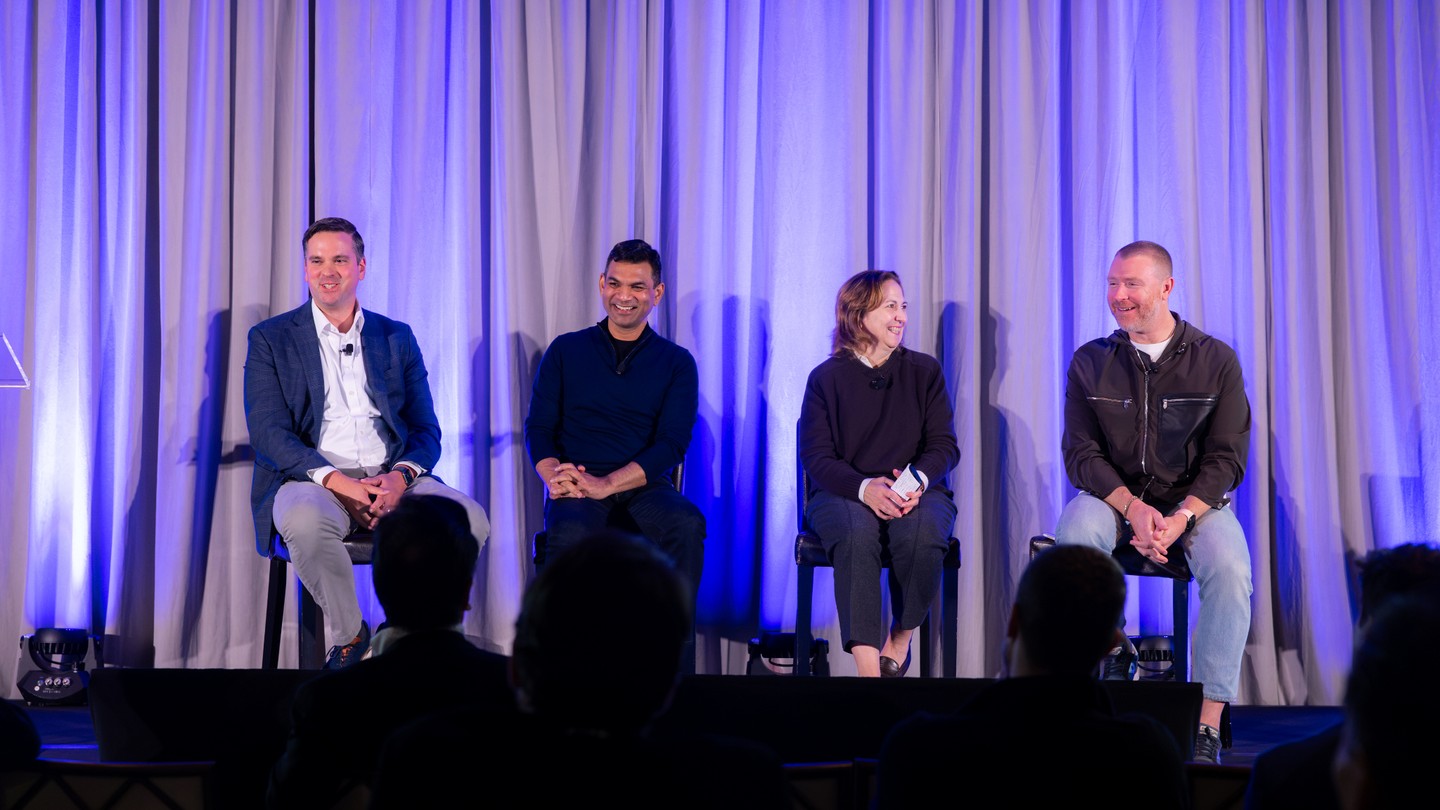
Panel discussion at JPMorganChase's 2026 West Coast Tech Week and the 18th Annual Technology Innovation Symposium

The Symposium concluded with the induction of new members into the JPMorganChase Hall of Innovation, an award that recognizes emerging technology companies for product excellence and industry disruption. This year’s Hall of Innovation Inductees were Sierra and Typeface. Congratulations to this year’s winners!