Blog

There has never been a more important time to be a technologist

October 1, 2026

Table of contents by prediction

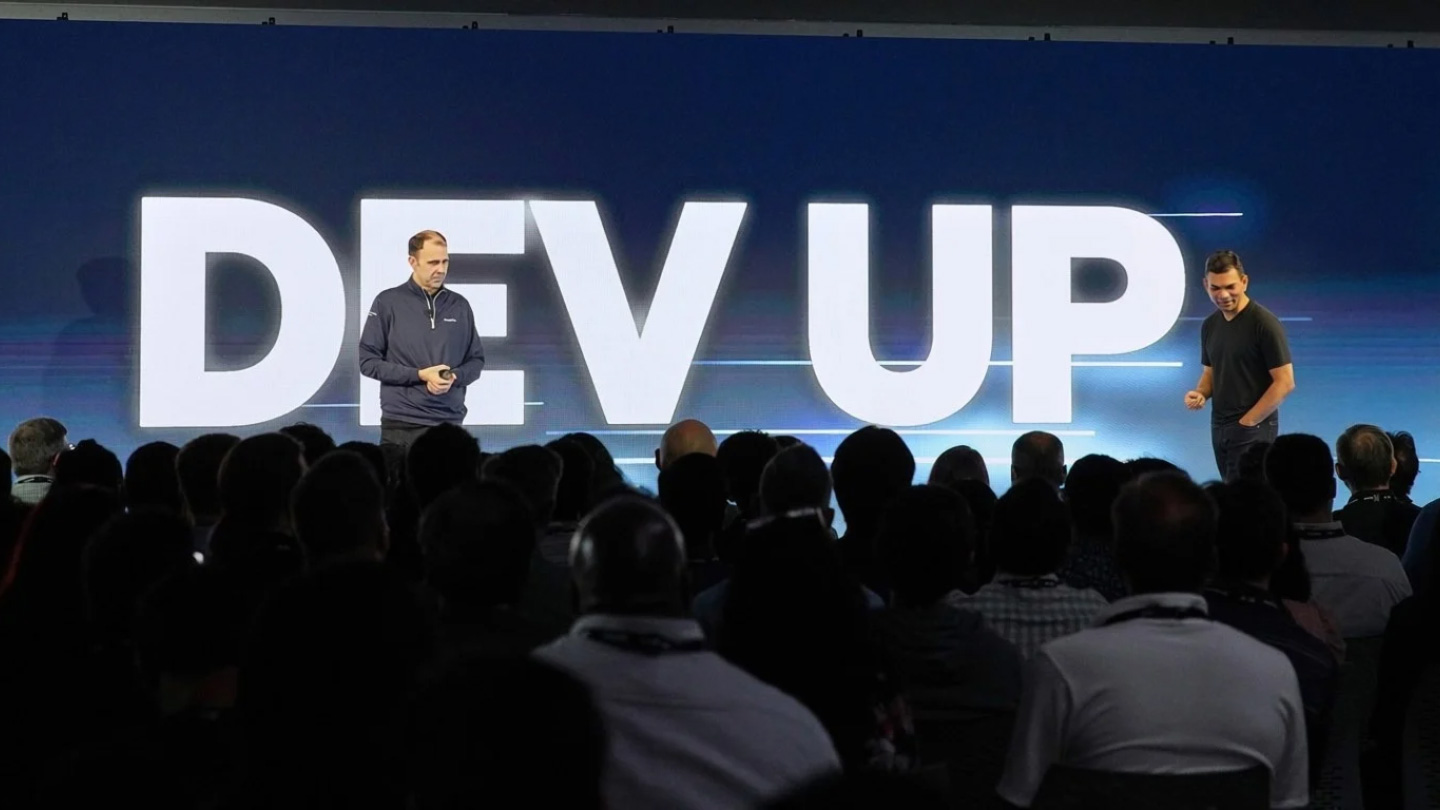
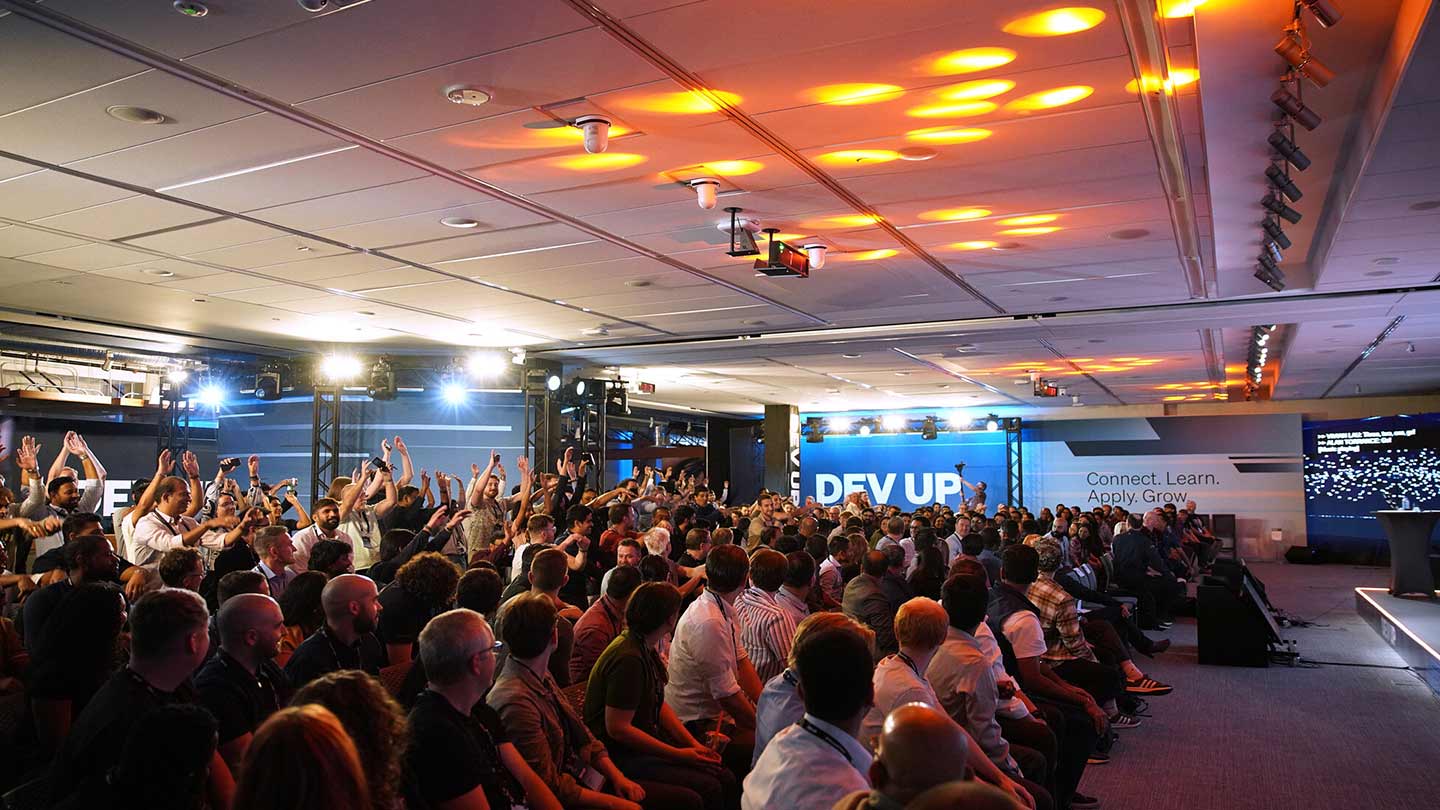
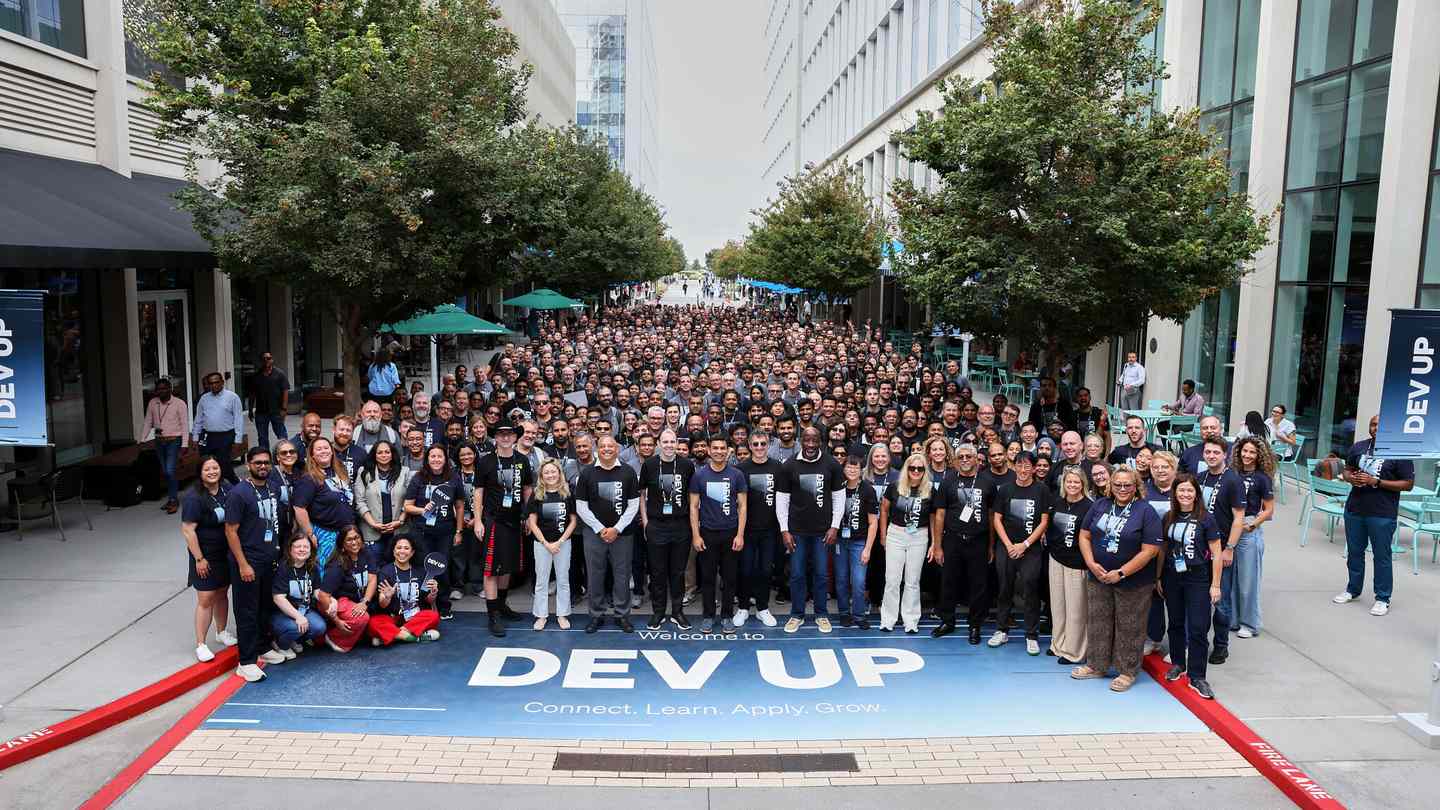
For the past five years, technologists across JPMorganChase have come together at DEV UP to explore what is possible in the realm of technological advancements. Now, new possibilities with AI, modernization, cybersecurity, software delivery, developer productivity are knocking at the door. The question is no longer “What if?” It’s “What Now?”

At our fifth annual DEV UP, we’re ensuring that these questions don’t go unanswered. Through six content tracks framed around Global Technology’s strategic priorities, attendees make sense of the principles shaping how the firm builds, operates and scales technology across JPMorganChase. These content tracks are informed by leads that have been selected to guide attendees through the ins and outs of the conference.

Drawing from their pulse on the tech landscape, strong expertise, and commitment to DEV UP, our track leads gave insights into what has changed and where we can go from here. These perspectives are a microcosm of the ideas that circulate at the conference. Here’s what they shared as we look ahead.

01

Scalable Data & AI Production-Ready Solutions

Track lead contributor: Ray Wangneo, Corporate Technology

We’re seeing AI play a crucial role in how we design data products, build applications, test quality and manage governance. It’s not only a key enabler of scalable systems, but the foundation for them.

This shift is tangible in everyday examples, such as turning data strategy into AI-ready data products and standardizing agentic solutions. We’re increasingly investing in architectural layers that give agents the right information and tools to produce work that is reliable, relevant, complete and verifiable.

As a global institution, JPMorganChase has a unique opportunity to help define what responsible enterprise AI adoption looks like. Our priority is turning the promise of AI into durable impact by creating the platforms, data foundations, governance and operating models that enable AI to be deployed safely, effectively and at scale. When teams can build on trusted data, reusable platforms, embedded governance and proven operating patterns, they can move from idea to impact faster without having to recreate foundational capabilities each time.

We see this in efforts to build governed content and data foundations that support reuse across the firm, as well as in approaches that ensure AI workloads run on the right infrastructure, at the right cost and with the right level of quality and performance.

In the spirit of good design, AI quality must be a priority that’s continuously evaluated, especially when it's embedded in workflows where accuracy, usability and trust are the bedrock of every evaluation. Build fluency in evaluation; don’t just measure once before launch.

It's important to understand models, prompts and AI frameworks, but production-ready AI depends on much more than the model itself. Data quality, metadata, lineage, entitlements, governance, evaluation, monitoring, reliability and lifecycle management are what determine whether an AI solution can be trusted and adopted at scale.

Curiosity that goes beyond the model builds expertise. At DEV UP, we discussed that technologists who understand how AI is built, deployed and operated are the ones best positioned to scale it.


01

Engineering Excellence

Track lead contributor: Jeff Rose, Consumer & Community Banking Technology

Engineering Excellence at JPMorganChase has always been less about what you’re doing and more about how you're doing it. One of the biggest changes the firm and the industry are undergoing is the introduction of Large Language Models (LLMs) into everyday engineering workflows. LLMs are a force-multiplier, which means it’s easier than ever to do things the right way or the wrong way. Now the challenge is not only knowing the right way but operationalizing it so the model follows secure, testable and supportable patterns.

At DEV UP, our Engineering Excellence track brings together many of the ways teams have incorporated LLMs into their products and processes. There are a range of sessions designed to strengthen knowledge and skills; for example, a hands-on lab that goes into the ins and outs of Model Context Protocol, guiding attendees to build their own servers based on their particular use case. More than educating engineers on some of the most relevant advancements impacting the landscape, the sessions aim to encourage them to rethink how software is written, how to preserve technical health and how to contribute to an engineering culture that weds quality and speed.

We are in the business of trust, and in technology that’s fostered through a strong, dedicated tech workforce. Ensuring engineering excellence across the firm is key to delivering better outcomes with less risk at scale. There is a palpable shift that re-centers judgment, ownership and system-level thinking. Prioritize quality over speed – it takes less time to do it the right way than to start from scratch. In every change, make repeatable quality improvements. Leverage LLMs to accelerate thinking and scaffolding and use your engineering discipline and judgement to decide what ships. Excellent engineers also never stop learning – a natural reason why they thrive at events like DEV UP.

01

Protect the Firm

Track lead contributors: Scott Cruickshanks, Cybersecurity & Technology Controls and Anthony Giles, Corporate Technology

The speed, scale, and complexity of technology delivery have fundamentally shifted. Across the industry, advances in automation and AI continue to change the cybersecurity threat landscape. At the same time, engineering teams are under pressure to deliver faster, which means security must be embedded into the development process rather than added as a separate checkpoint. The goal is not to slow innovation down; it is to create paved roads where teams can move quickly and securely by default.

Organizations need to assume change is constant and build systems that can adapt. Staying current is not just a compliance exercise or a once-a-year cleanup effort. It is about building healthy engineering habits: modernizing continuously, reducing unsupported technology, improving visibility, and making upgrades easier to execute.

As more workloads move to cloud-native platforms, and as AI shifts from a discrete capability to an industry-wide theme embedded across the software development lifecycle, the link between engineering quality and security resilience becomes a cornerstone of a strong, efficient organization. What’s notably different this year is how teams are applying AI in more consequential ways to protect the firm, with impact that feels meaningfully higher than in prior cycles. This is being matched by an increased emphasis on security as adoption accelerates.

If security is built in from the beginning, teams can move faster with more confidence. If controls are automated, developers spend less time navigating manual processes. If platforms are secure by default, application teams can focus more of their energy on delivering business value.

The best security engineers understand how technology behaves under pressure – how identity can be misused, how a dependency can introduce risk, how a small configuration decision can create a large exposure and how operational shortcuts can compound over time. The future of security is not about standing outside the engineering process and pointing out problems after the fact. It is about partnering with teams, understanding their constraints and creating patterns that make the secure path the easiest path.

Security teams still have an important role to play, but the scale and speed of modern technology mean security has to be a shared priority at an organizational level. It is part of how we design, build, deploy and operate technology. If we keep that mindset, then “everything has changed” becomes less of a warning and more of an opportunity to engineer better, safer systems.

01

Modernization

Track lead contributor: Gary Fleming, Infrastructure Platforms

A critical priority for JPMorganChase, modernization allows us to deliver value faster than ever. Advancements have unlocked capabilities that we couldn’t have dreamed of years ago, while strengthening the firm from a myriad of threats. There’s no better time, and no better place than DEV UP, to discover the innovation taking place across the firm and apply it to your day-to-day.

We’re seeing the continued impact of AI on all aspects of technology, including modernization. While that trend started last year, DEV UP sessions are now bringing AI front and center in our tooling, processes and innovation strategies. Many sessions are now showing how incorporating agentic workflows into daily development can transform our technology faster than ever, allowing developers to focus on the biggest impact items and leaving the undifferentiated heavy lifting to the machines. One in particular focuses on how to modernize legacy Chase applications in hours, showcasing what’s possible – accelerating long, tedious modernization journeys and delivering value for millions of customers in significantly shorter timespans.

Modernization is ultimately a mindset as much as it is a project. At JPMorganChase, our modernization strategy is shaped by a commitment to reduce friction, retire fragility and build with intention so we can move fast and securely. As competitive and security-related pressures rise, we need to explore ways to leverage AI and agentic workflows that are anchored in clear outcomes, resiliency and measurable impact. 

01

Architecture

Track lead contributor: Derek Jean-Baptiste, Employee Platforms

Foundational model capabilities have expanded into multimodal behaviors we normally attribute to humans. AI tooling has changed the way we think about creating systems and integrating them into our environment. Across JPMorganChase, teams are exploring ways to organize themselves around the technology so they can maximize its usefulness. Early on, adoption was driven by removing barriers such as cost. Now that usage is broad, cost discipline is a priority. Efficiency matters, and a lot of that comes back to the guardrails and architectural patterns in place.

There’s a lot of information passed between managers and teammates that an agent does not necessarily have access to. Advancements in AI have forced us to rethink how we store and share crucial information so that agents can access it securely. That’s where our track comes in. Historically, architecture has been a niche capability. However, we’ve moved into the fast lane of development, requiring clearer guidance on how systems should be assembled, tested and validated. We’re also seeing teams evolve their operating model; leaner teams with senior oversight, where some focus on feeding context to agents and others focus on correcting them.

Not everyone needs to become an architect, but everyone needs the foundational skill to spot flaws, recognizing when something looks good or when they need to phone a friend for help. DEV UP is a good place to start. It’s one of the unique moments where technologists from every corner of the firm are in one place. It’s a chance to grow a network you can lean on while strengthening your own skills and confidence.

One of the biggest catalysts for technological advancements is our imagination and understanding what agents are capable of. As our imagination expands, the way we work will evolve again.

01

Applied Research and Innovative Products and Experiences

Track lead contributors: Niraj Kumar, Global Technology Applied Research and Marnie McCormack, Infrastructure Platforms

The Applied Research track helps identify emerging technology that is turning into practical, trusted capabilities that can be used at enterprise scale. We have to understand where it can create real value, how it behaves in complex environments, what risks or limitations it introduces, and what it takes to make it reliable, secure and responsible.

In AI, the conversation has shifted from whether models can perform certain tasks to how we apply them effectively and responsibly. The harder questions are now about evaluation, reliability, grounding, failure modes and measurable impact for users and business outcomes. While it is at a different stage than AI, quantum computing is also maturing rapidly both at the algorithmic and hardware levels. For us, the key is understanding where quantum can create meaningful advantage, how to evaluate progress realistically and how to connect research breakthroughs to practical use cases over time.

We need to understand what is useful, measurable, responsible and scalable. Evaluation, benchmarking, grounding and controls need to be part of the research process from the beginning, which ultimately helps us build technologies that people can trust. It is easy to be impressed by a demo or an early result, but the more important skill is understanding what is actually working, what can be improved and what metrics truly matter.

A strong evaluation mindset helps separate signal from hype and connects technical results back to real outcomes. Models, tools and frameworks will keep changing, but staying close to the fundamentals still matters. Understand the problem, know your data, design good experiments, reproduce results where possible and stay skeptical of your own conclusions.

To build something useful and trustworthy, you need people with different perspectives involved early: researchers, engineers, product teams, design partners, controls partners and the people who will actually use the system. At DEV UP, you can meet them, learn from one another, challenge assumptions and see how ideas are being put into practice.

FOR INFORMATIONAL PURPOSES ONLY